
Chemnitz

50.82822, 12.92085

Chemnitz Travel Guide

Travel Author

Stig Albeck

City Map

City Introduction

Chemnitz is the third largest city in the state of Saxony. Its name comes from the Sorbian word for a rocky place, Kamjenica, but the town has not always been called Chemnitz. In the years 1953-1990, in the East German era, the city was named Karl-Marx-Stadt in memory of Karl Marx, who was one of the fathers of communism and thereby the GDR. As a large industrial city, there were also members of the German Communist Party in Chemnitz early in the 20th century.

Because of Chemnitz’s large industry, large parts of the city were destroyed by bombing during World War II. This gave the new government in the GDR the opportunity to rebuild the city as a model city based on socialist urban planning. By and large, the city was built according to these plans, and thus both the center and suburbs are characterized by modern buildings, and in the center stands a monument to Karl Marx.

After the German reunification in 1990, the city government decided to rebuild the area around the historic town hall to the time before World War II. Therefore, around the squares Neumarkt and Jacobikirchplatz you can explore the old Chemnitz between the modern streets and constructions. You can also see the preserved Chemnitz at the Theaterplatz, in the Kaßberg quarter west of the center and on the street Am Wall, where the Roter Turm is preserved.

In Chemnitz you can visit several interesting museums. The Gunzenhauser Museum is one of Germany’s finest museums for modern art, and there is a large collection of works from the 20th century to the present day at the museum. The art museum also has the Kunstsammlungen Chemnitz department on Theaterplatz, located in a beautiful museum building from 1909. In the city you can also see examples of Chemnitz’s famous petrified forest. The Tietz building is a good place for a view.

Top Attractions

Market Square
Markt

The Markt is one of the most important historical sites in Chemnitz and has served as a center for trade, meetings and city life since the Middle Ages. As early as the 12th and 13th centuries, the market square developed into the economic heart of the city, where farmers, craftsmen and merchants gathered to exchange goods. The first representative town houses were built around the square, underlining its importance as a symbol of Chemnitz’s prosperity. The market square became not only a trading place, but also a place where political and social events took place and where you could follow the city’s development at close range.

Among the most striking buildings on the Markt is the old town hall, Altes Rathaus, which dates back to the 15th century. The building combines late medieval and Renaissance elements and has been the city’s administrative center for centuries. Next to it stands the new town hall, Neues Rathaus, which was built at the beginning of the 20th century in a monumental historicist style and forms a strong contrast to the old town hall. The town hall tower, which rises above the square, still functions as one of the city’s landmarks. The square also houses the town hall cellar, Ratskeller, which today houses a restaurant and is known for its characteristic cellar vault.

During the GDR period, Markt took on a more open feel with functionalist buildings, but in recent decades several of the facades have been restored or reconstructed, so that the square once again appears as a mixture of historical and modern architectural expressions. Today, the square is flanked by, among other things, a striking 1960s building that houses shops and offices, as well as newer buildings that seek to adapt to the historical environment.


St. Jacob’s Church
Jakobikirche

St. Jakobikirche is a large church located on Jakobikirchplatz in central Chemnitz. It is the oldest surviving church in Chemnitz and can be traced back to the 14th century. The church was built as a late Gothic hall church, and its origins are connected with the growing commercial city, where religious institutions played a central role. Already in the Middle Ages, St. Jakobikirche was an important meeting place for the citizens of the city, and it was expanded in several stages throughout the 15th century.

During the Reformation in the 16th century, St. Jakobikirche became the city’s first Protestant parish church, which changed its liturgical function and interior design. Many of the Catholic side altars were removed, and instead the pulpit and the congregation’s participation were placed in the center. However, the church was allowed to retain its impressive late Gothic character, including the ribbed vaults, the high windows with pointed arches and a number of medieval frescoes, which are still preserved in fragments.

The building was severely damaged during the Allied bombing of Chemnitz in March 1945, during which large parts of the roof and interior were lost. Reconstruction took place in the 1950s and 1960s, when attempts were made to recreate the historical structure, and the square around it was opened up as part of the modern urban space. The architecture around Jakobikirchplatz is therefore characterized by both historically preserved buildings and the more functional construction of the post-war period.


Theatre Square
Theaterplatz

Theaterplatz is one of the most impressive squares in Chemnitz. It was laid out in the 19th century as a representative space for art and culture. The square was created in connection with the construction of the Chemnitz Opera House, which was completed in 1909 in Art Nouveau style with classicist features. Its location underlined the city’s growing role as a cultural center in imperial Germany.

In the interwar period, the square became an important gathering place for the bourgeoisie with cafes, hotels and cultural institutions. During World War II, the buildings on the square suffered extensive damage, but the Opera House and other central buildings were restored in the post-war period, albeit with some simplifications in the decoration.

Today, Theaterplatz forms an architectural whole with the Opera House, the König-Albert-Museum and the Petrikirche as striking buildings. The square has been modernized with paving, lighting and green elements, but it retains its character of the representative architecture of the 19th and early 20th centuries.


Chemnitz Opera House
Opernhaus Chemnitz

The Chemnitz Opera House was inaugurated in 1909 as the city’s new theatre and opera house and became a symbol of Chemnitz’s self-image as a modern industrial city with cultural significance. The building replaced an older theatre hall that could no longer meet the demands of a growing audience. The new opera house became a centre for music and the performing arts and gained international recognition for its ambitious repertoire, which included both classical works and modern performances.

The architecture reflects the transition between Art Nouveau and Classicism. The façade is monumental with columns, balustrades and a representative entrance hall, while the interior was originally characterised by the elegant ornamentation and flowing forms of Art Nouveau. After World War II, when the building was badly damaged during the bombing in 1945, the opera house had to be rebuilt. In 1951, it reopened with an interior that mixed restored historical elements with a more functional post-war aesthetic.

Today, the Chemnitz Opera House is home to the Robert Schumann Philharmonic, one of Germany’s oldest orchestras, and the city’s opera and ballet ensemble. The house is known for its broad artistic profile and its courage in putting rarely performed works on the program. Architecturally, the building still stands as a distinctive cultural center in the city center and is an important part of the city’s identity as a place where industry and culture meet in harmonious balance.


Chemnitz Art Collections
Kunstsammlungen Chemnitz

The Kunstsammlungen Chemnitz is one of the largest municipal art collections in Germany. It dates back to the 1860s, when the city’s citizens began building up a public collection. It was organized as a museum in the late 19th century and was housed in the König-Albert-Museum, which opened in 1909. The building was designed by Richard Möbius in a neo-Renaissance style with a monumental facade and richly decorated interiors.

The collection includes works from Baroque to contemporary art, with particularly strong representations of German Romanticism, Impressionism and Modernism. Highlights include works by Caspar David Friedrich, Edvard Munch, Ernst Ludwig Kirchner and many of the great German Expressionists. The museum also plays an important role in documenting the art scene in Chemnitz and Saxony.

Architecturally, the König-Albert-Museum stands as a striking cultural building on Theaterplatz with a monumental staircase, sumptuous exhibition halls and a classically symmetrical facade. After reunification, the building was restored, and today the museum functions as a modern art house with both permanent collections and international special exhibitions.


St. Peter’s Church
Petrikirche

The Petrikirche is one of the most striking churches in Chemnitz and a prominent example of neo-Gothic church architecture in Saxony. The church was built at the end of the 19th century, after the city’s growing population required a new, large parish church. It was designed by the architect Richard Schilling and inaugurated in 1888. With its tall, slender tower, pointed window arches and richly decorated details, the building stands as a clear symbol of the neo-Gothic style that was popular in Germany at the time.

The church was badly damaged during World War II, but the reconstruction still left its characteristic architecture intact. Today, the Petrikirche is used both as a parish church and for cultural events such as concerts, which benefit from its impressive acoustics. The church is an important cultural and historical focal point in Chemnitz, attracting both locals and visitors who want to experience its atmosphere.


Red Tower
Roter Turm

The Roter Turm is one of the oldest buildings in Chemnitz, dating back to the late 12th century. Originally part of the city’s fortifications, it served as a watchtower and later as a prison. The tower was built of reddish sandstone, which gave it its name, and it is one of the few medieval buildings in the city that has survived to the present day.

During the 16th and 17th centuries, the Roter Turm lost its military function, but remained a symbol of the city’s history. During World War II, the tower was damaged but not destroyed, and it was restored in the 1950s. Architecturally, the tower is an example of the Romanesque-Gothic transitional style, with thick walls, narrow windows and a characteristic pointed roof structure.


Stadthalle Chemnitz

The Stadthalle Chemnitz was built between 1969 and 1974 as one of the most prestigious cultural buildings in the GDR. The architect Rudolf Weißer was behind the project, and was tasked with creating a modern concert and conference hall that would serve as both the city’s cultural center and a representative landmark for Karl-Marx-Stadt, as the city was called at the time. The construction coincided with the massive transformation of the city center, where the Karl-Marx Monument and the large Plattenbau buildings around the Brühl district were built. The Stadthalle was inaugurated in 1974 and quickly developed into one of the most important venues for music, fairs and major political meetings in the entire GDR.

The building is a typical example of late modernist and brutalist GDR architecture, characterized by large concrete surfaces and strict geometric shapes. The Stadthalle was located directly next to the Karl-Marx Monument, emphasizing its role as an integral part of the city’s new socialist center. The façade is characterised by modular concrete panels combined with dark glass sections, giving the building a distinctive, monumental appearance. The interior emphasises functionality and flexibility. The concert hall can accommodate several thousand spectators and is equipped with variable acoustics, making it suitable for both classical music, opera and large political congresses.

After the fall of the GDR in 1990, the Stadthalle faced the challenge of finding a new role in a reunified Germany, where many GDR buildings were downgraded or demolished. Instead of demolishing it, Chemnitz chose to preserve and modernise the building, and it was renovated in the 1990s and 2000s to meet today’s technical requirements. Today, the Stadthalle functions as one of the city’s largest cultural centres and is home to concerts, theatre performances, trade fairs and international conferences. Today, the building has become an important testament to the architecture and urban planning of the GDR era.


Karl Marx Memorial
Karl-Marx-Denkmal

The Karl-Marx-Denkmal is a famous monument in Chemnitz. It is the city’s modern landmark, inaugurated in 1971 during the GDR era. The monument consists of a 7.1-meter-high bronze head of Karl Marx, created by the Soviet sculptor Lev Kerbel. It weighs 40 tons and is mounted on a massive granite base, making it one of the largest portrait sculptures in the world.

Its location in the middle of the city on the former Karl-Marx-Allee, now called Brückenstraße, was a deliberate political designation of Chemnitz as a socialist model city. During the GDR era, the city was called Karl-Marx-Stadt, and the monument became a gathering point for official parades, demonstrations and socialist celebrations.

Architecturally, the monument contrasts with the monumental concrete buildings in the background, on which Marx’s famous quote “Proletarians of all countries, unite!” is carved in several languages. After reunification, the monument was retained as part of the city’s cultural heritage, and today it is an important tourist attraction and symbol of the city’s GDR history.


Museum Gunzenhauser

The Museum Gunzenhauser is an art museum that opened in 2007 and is housed in the former headquarters of Bankhaus H. Lößnitz. It is a functionalist building from 1928, designed by architect Fred Otto. The building is considered a masterpiece of Neue Sachlichkeit architecture in Chemnitz and is characterized by a strict, geometric facade and functional interior.

The museum houses the large collection that the art dealer Alfred Gunzenhauser bequeathed to the city. The collection consists of over 2,400 works with a focus on classical modernism, including expressionism, Neue Sachlichkeit and the post-war avant-garde. Works by Otto Dix, Karl Schmidt-Rottluff and other major German artists are among the highlights.


Schlossberg Museum and Chemnitz Abbey
Schlossbergmuseum und Koster Chemnitz

The Chemnitz Abbey is a former Benedictine monastery in Chemnitz, founded in 1136 by Margrave Conrad the Great. For centuries it was one of the most important monastic complexes in eastern Germany. The monastery was not only a religious center, but also played a central role in the region’s economic development through land holdings, crafts and trade. The Reformation in the 16th century led to the dissolution of the monastery, after which the buildings gradually acquired new functions.

Architecturally, the complex is characterized by both Romanesque and Gothic features. The monastery church, which is still preserved, contains round-arched windows and massive walls from the Romanesque period, while later Gothic additions introduced pointed arches and vaulted ceilings. The inner monastery complex with the cloister courtyard clearly shows how the building developed over time, and it reflects the mixed style often seen in medieval church buildings that have undergone several construction phases.

Today, the complex functions as the Schlossberg Museum. It is a cultural history museum that documents Chemnitz’s medieval history and religious life. The collections include valuable medieval altarpieces, sculptures, church art and objects from the former monastery. The museum is one of the most important sources for understanding Chemnitz’s development from a medieval monastery town to an industrial metropolis and is a central cultural historical monument in Saxony.


Villa Esche

Villa Esche was built in 1902-1903 for the textile manufacturer Herbert Eugen Esche, who was part of one of Chemnitz’s wealthiest industrial families. He engaged the Belgian architect Henry van de Velde, who was one of the leading figures in Art Nouveau and later an important figure in the Bauhaus movement. The villa marks a turning point in the history of European architecture, as it is an early example of the idea of ​​a Gesamtkunstwerk, where building, interior design and artistic decoration merge into a whole.

The architecture combines the soft, organic forms of Art Nouveau with a clear and functional division of space. The villa has a striking asymmetrical facade, large windows and a layout that was unusually modern for its time. Henry van de Velde designed not only the house, but also the furniture, lamps, carpets and textiles, which means that the interior appears as an integrated artistic whole. Many of these original elements have been preserved and restored.

After World War II, the villa was confiscated and used for various purposes under the GDR, including as a cultural institution. In the 1990s, Villa Esche was extensively restored, and today it functions as both a museum and a cultural center, where you can experience van de Velde’s design and learn about Chemnitz’s rich industrial culture. Today, the villa is an important architectural monument from its time in the city and attracts visitors from all over Europe as one of the best-preserved Art Nouveau works in Germany.


Museum of Natural Sciences & Chemnitz Petrified Forest
Museum für Naturkunde & Versteinerte Wald von Chemnitz

The Museum für Naturkunde Chemnitz is one of the oldest natural history museums in Germany and dates back to 1859. The museum is particularly known for its unique collection of the petrified forest from the Permian period, which is considered one of the most important geological finds in Europe. However, the exhibitions are much broader and include fossils, minerals, animals and plants that provide insight into the earth’s development history and biodiversity. The museum emphasizes combining research, conservation and dissemination, and it functions as an important center for scientific study of paleobotany and geology.

The Versteinerte Wald von Chemnitz is a small petrified forest in Chemnitz. It is also one of the most spectacular natural history finds in Germany and among the largest of its kind in Europe. The forest dates back to the Permian period, around 291 million years ago, when a lush forest area at the foot of the Zeisigwald volcano was suddenly covered in volcanic ash from a nearby eruption. The layers of ash encapsulated tree trunks, plants and organic materials, which over millions of years were petrified in an exceptionally well-preserved state. The result is a unique geological site that provides a detailed insight into the plant world and climate of the time.

The first petrified trunks in Chemnitz were discovered as early as the 18th century, but the most extensive excavations have taken place since the 19th century and up to the present day. Large parts of the forest are now on display in the Museum für Naturkunde Chemnitz, where visitors can experience the mighty, silicified tree trunks, some of which are up to 20 meters long. In addition to their geological value, the petrified trees also have great scientific importance, because they have contributed to research into Permian ecosystems and the development of early forests. The Petrified Forest is therefore not only a local attraction, but also a piece of world heritage in the natural history sense.

Other Attractions

Day Trips

Katolische Hofkirche, Dresden

Dresden

Dresden is a beautiful city, which the Saxon electors throughout history have built as a true world city in beautiful baroque, and between the distinguished buildings, culture has always flourished. As a visitor, you can fully enjoy this when you go on a trip to the city, which is both interesting for its old and new architecture.

The Zwinger, Katolische Hofkirche, Semperoper and Frauenkirche are some of the places most people will nod in recognition of, but you should also enjoy some very differently conceived facilities such as the Altmarkt and Prager Straße, both of which date from the GDR era. There are also enchanting promenades along the Elbe, interesting museums and a vast number of beautiful buildings not least from the Baroque period.
More about Dresden


Altes Rathaus, Leipzig

Leipzig

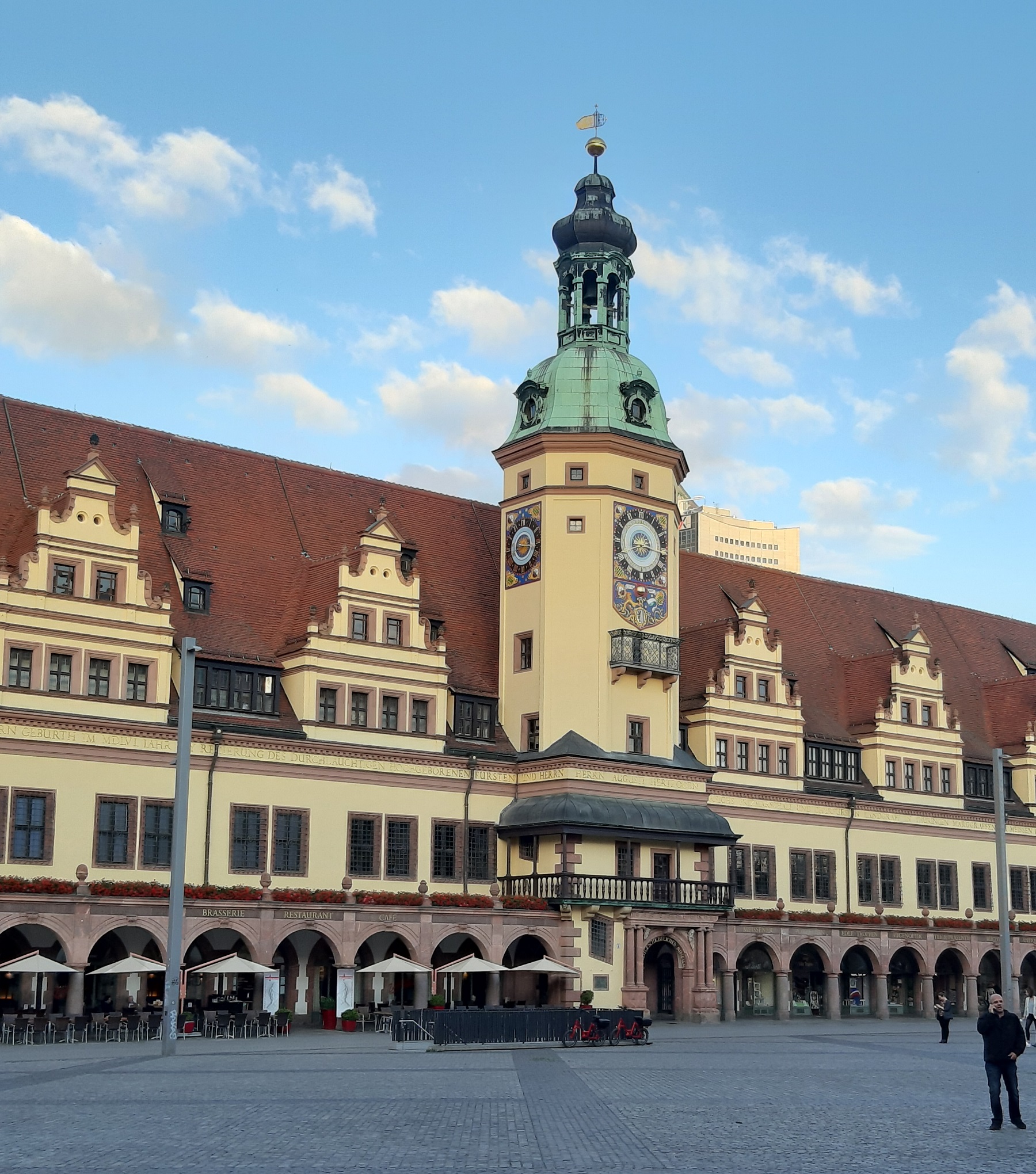
Leipzig is a city with long and proud traditions in trade. It was here that the trade routes Via Regia and Via Imperii crossed each other, thereby connecting most of Europe through Leipzig. Trade created a wealthy city, which for a period was also one of the European strongholds for culture and education.

There are many beautiful and impressive buildings in Leipzig, where you can enjoy architecture from many eras. The city’s old town hall stands as one of Germany’s finest Renaissance buildings, and you can also see fine examples from the Baroque and later architectural styles, not least from historicism.

More about Leipzig


Karlovy Vary, Czech Republic

Karlovy Vary

Karlovy Vary is one of the famous spa towns in the northwestern Czech Republic. The city is located at the confluence of the rivers Ohře and Teplá, and it is named after its founder, Charles IV, who was King of Bohemia and Holy Roman Emperor. Karlovy Vary was founded in 1349, and it was due to the city’s hot springs, which since then created a hot spot for a colossal tourism development from large parts of the world.

In Karlovy Vary you can enjoy some lovely walks in the cozy centre, where elegant architecture characterizes the cityscape. It is especially along the banks of the river Teplá that you can explore the characteristic Karlovy Vary from the time when the city became one of Europe’s most visited spa towns. Here are squares, parks, hotels, spas and, of course, the view of the city’s beautiful buildings in, for example, Lázeňská street.

More about Karlovy Vary

Geolocation

In short

Karl Marx Monument, Chemnitz Karl Marx Monument, Chemnitz[/caption]

Overview of Chemnitz

Chemnitz is the third largest city in the state of Saxony. Its name comes from the Sorbian word for a rocky place, Kamjenica, but the town has not always been called Chemnitz. In the years 1953-1990, in the East German era, the city was named Karl-Marx-Stadt in memory of Karl Marx, who was one of the fathers of communism and thereby the GDR. As a large industrial city, there were also members of the German Communist Party in Chemnitz early in the 20th century.

Because of Chemnitz’s large industry, large parts of the city were destroyed by bombing during World War II. This gave the new government in the GDR the opportunity to rebuild the city as a model city based on socialist urban planning. By and large, the city was built according to these plans, and thus both the center and suburbs are characterized by modern buildings, and in the center stands a monument to Karl Marx.

After the German reunification in 1990, the city government decided to rebuild the area around the historic town hall to the time before World War II. Therefore, around the squares Neumarkt and Jacobikirchplatz you can explore the old Chemnitz between the modern streets and constructions. You can also see the preserved Chemnitz at the Theaterplatz, in the Kaßberg quarter west of the center and on the street Am Wall, where the Roter Turm is preserved.

About the Chemnitz travel guide

Contents: Tours in the city + tours in the surrounding area
Published: Released soon
Author: Stig Albeck
Publisher: Vamados.com
Language: English

About the travel guide

The Chemnitz travel guide gives you an overview of the sights and activities of the German city. Read about top sights and other sights, and get a tour guide with tour suggestions and detailed descriptions of all the city’s most important churches, monuments, mansions, museums, etc.

Chemnitz is waiting for you, and at vamados.com you can also find cheap flights and great deals on hotels for your trip. You just select your travel dates and then you get flight and accommodation suggestions in and around the city.

Read more about Chemnitz and Germany

France Travel Guide: vamados.com/germany
City tourism: visitchem-nitz.de

Main Page: https://www.vamados.com/

Buy the travel guide

Click the “Add to Cart” button to purchase the travel guide. After that you will come to the payment, where you enter the purchase and payment information. Upon payment of the travel guide, you will immediately receive a receipt with a link to download your purchase. You can download the travel guide immediately or use the download link in the email later.

Use the travel guide

When you buy the travel guide to Chemnitz you get the book online so you can have it on your phone, tablet or computer – and of course you can choose to print it. Use the maps and tour suggestions and you will have a good and content-rich journey.


Travel Expert

Stig Albeck

Gallery

Gallery

Other Interesting Guides

Similar to Chemnitz Travel Guide