
Sioux Falls

43.54602, -96.73127

Sioux Falls Travel Guide

Travel Author

Stig Albeck

City Map

City Introduction

Sioux Falls is the largest city in the US state of South Dakota. The town’s history started in 1856, when two groups from The Dakota Land Company and the Western Town Company claimed lands around the Great Falls of the Big Sioux River. The groups worked together and established themselves, and in the first winter 17 men stayed on site. The 17 became more, but the settlement was abandoned in due to the Sioux uprising in 1862. In May 1865, Fort Dakota was established in what is today downtown Sioux Falls.

Many former residents returned along with more settlers, and Sioux Falls grew and formally became a city in 1883. In the same decade, the railroad came to town and the population quickly quadrupled to over 10,000. Growth continued in the 20th century with the establishment of industries, agricultural production and a military base in the first half of the century and trade and services in recent decades.

Today you can explore a modern city where you can take some nice walks along the Big Sioux River and through downtown to see the city’s sights. The most famous building is the Minnehaha County Building, built in 1890 to house the regional government for Minnehaha County. The building style is an example of the so-called Richardson Romanesque architecture, named after the American architect Henry Hobson Richardson.

The building functioned as a government building until 1962 and as a courthouse. Today you can visit the Old Courthouse Museum in the beautiful building, and at the museum there are exhibits on Sioux Falls’ and the region’s history, Native American cultures and life on the prairie.

Main Avenue runs through downtown Sioux Falls, where you can see buildings from different periods of Sioux Falls’ history. Here is the Washington Pavilion of Arts and Science, which houses many different institutions. Washington Pavilion is the name of the former Washington High School, where you can find, for example, an art museum, a concert hall and a science museum with interesting exhibits.

In the building’s Egger Gallery, you can see a fine collection of Native American art. The building, like many of the houses in Sioux Falls, was built in quartzite of the kind you can see at the city’s famous waterfall. Next to the Washington Pavilion is the First Lutheran Church, one of the city’s churches, and if you go east, you come to the Big Sioux River and Fawick Park, where there is a copy of Michelangelo’s David.

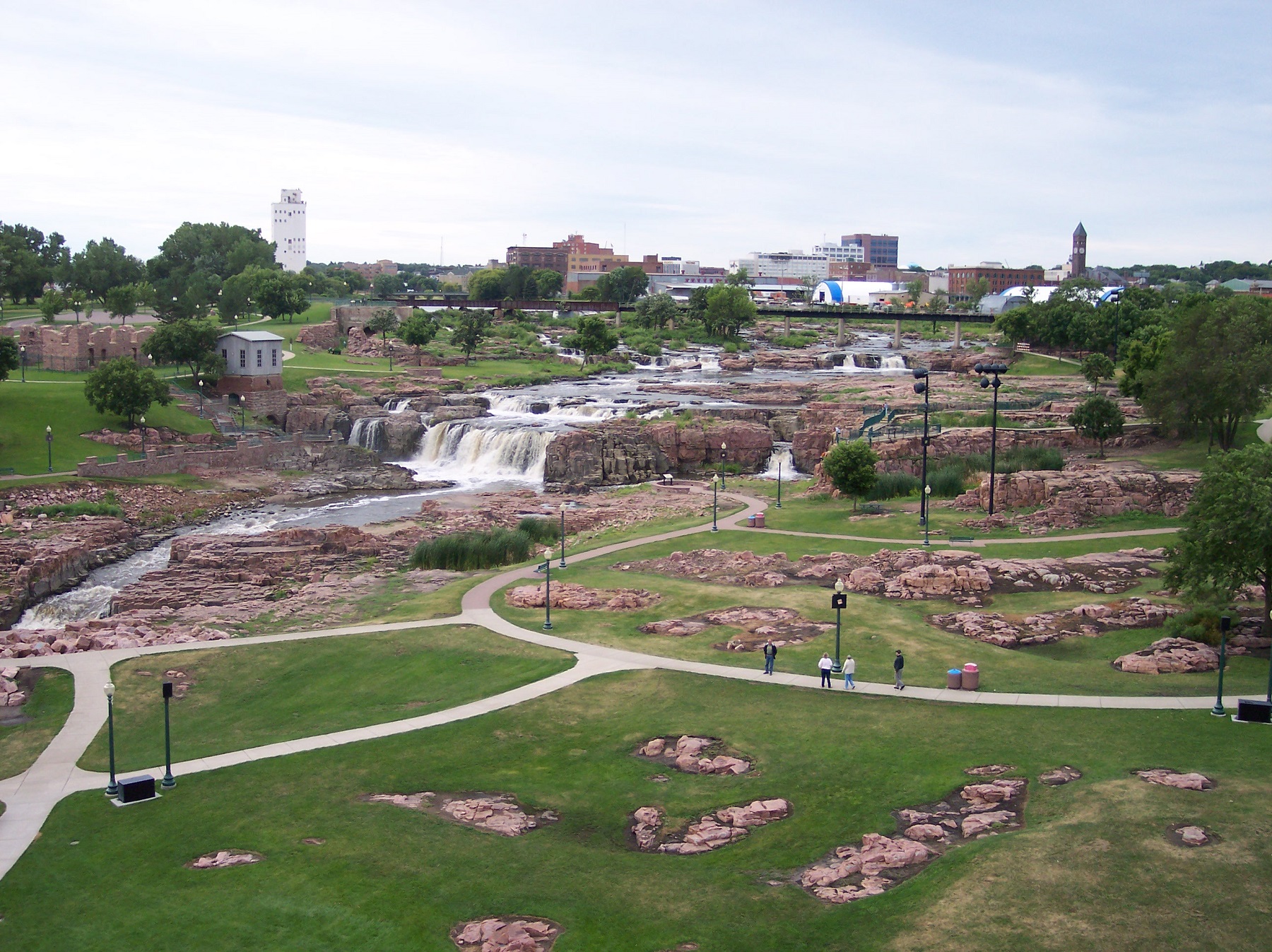
Just north of downtown are the actual waterfalls of the Big Sioux River, which in its time gave rise to the founding of the city right here. In the area of ​​the falls, approximately 28,000 liters of water flow down through the 30-meter-high falls every second. The area around the falls is called Falls Park, and here you can walk along many paths to several viewpoints on each side of the river, and thus you can see the falls up close from all sides.

There is a bridge over the river and a cafe overlooking the beautiful area as well. The cafe is housed in the Sioux Falls Electric Light and Power Company’s hydroelectric plant, which opened in 1908. The park also houses the remains of a mill that was active from 1881-1883, and a visitor center from which you can see all of Falls Park from above in the observation tower.

Top Attractions

Main Avenue

Main Avenue is one of the oldest commercial streets in Sioux Falls, developing in the late 1800s as a linear sequence of stores, hotels, and small industrial businesses. The street is characterized by buildings constructed of Sioux Quartzite and brick, with the earliest facades consisting of structures with retail spaces on the ground floor and residences or offices above.

Many buildings on Main Avenue still stand in their original appearance. The facades from around 1900 show a combination of local stone materials and imported details such as cast iron columns and metal window frames. These elements became typical of cities that grew rapidly during the era of railroad expansion. Several blocks have been preserved with continuity in materials and height, giving the street a cohesive look. This can also be seen in nearby streets such as S Phillips Avenue.


Falls Park

Located on the Big Sioux River, Falls Park is the area where the city’s first industrial facilities were built in the late 1800s. The park covers a large area around the natural granite formations that create a multi-level drop. As early as the 1870s, the first mills were built close to the water, and the ruins of the Queen Bee Mill still show the extent of the industrial ambition. The mill was built with six stories and was powered by a complex system of water turbines, and although the plant was never economically successful, the ruins mark a key stage in the region’s transition from pioneer times to organized urban development.

The park contains a series of viewing platforms from which you can view the river’s course and the natural rock formations. The Big Sioux River is divided into several streams through granite layers that were quarried for construction in Sioux Falls for many years. The material was used in public buildings, railroad stations, and private construction. There are trails that lead along the river and past the remains of dams and engineering installations that once regulated hydroelectric power.

In the northern part of the park is the former hydroelectric plant, built in the early 1900s. The building was built of granite and brick and represents the early electrification of Sioux Falls. The interior retains parts of the original machinery, showing how power was produced and distributed to the growing city. The plant interestingly marks the transition from mechanical water power to electrical energy as the primary source of supply.


Old Courthouse Museum

The Old Courthouse was built between 1889 and 1893 as the administrative building for Minnehaha County. The building was built to house both judicial functions and other local government. The architecture follows Romanesque-inspired principles with round-arched windows, thick wall sections and a central bell tower. The construction demonstrates the use of local stone, which was characteristic of the region’s major public buildings in the late 19th century.

The entrance leads to a central hall with stone stairs, cast iron elements and wood cladding. The interior was designed to accommodate both administrative offices and courtrooms, and several of the rooms feature original murals depicting the early development of the state and county. These paintings were done as decorative storytelling and illustrate, among other things, pioneer life, industrial development, and the relationships between railroads, agriculture, and public administration.

The building’s tower was constructed as a central architectural element to mark the role of the courthouse in the cityscape. The Old Courthouse was later replaced by newer administrative buildings, but stands as an intact example of early public architecture in Sioux Falls. The building now houses a museum and collections documenting the political and social development of the area.

Today, the building houses the Old Courthouse Museum. Here, you can see collections that include artifacts from the city’s pioneer days, industrial development, and social history. There are themes that follow the development of the region from the 19th to the 20th century, and the museum also highlights the early use of Sioux Quartzite as a building material and displays examples of craftsmanship, technology, and material use from the 19th and 20th centuries. There is also a section of the exhibits that describes transportation, railroads, agriculture, and industry.


St. Joseph Cathedral

St. Joseph Cathedral is the cathedral of the Catholics of Sioux Falls and one of the most striking religious buildings in the state. The church was built in the early 1900s in a monumental style with strong inspiration from European church buildings. The facade is built of light stone with symmetrical towers on each side of the main entrance. The towers are equipped with bells, and between them the facade contains large round-arched windows and a prominent portal with carved details.

Inside, a beautiful and bright space dominates in a long nave plan, where the nave and aisles are separated by columns. The ceiling is made as a series of barrel vaults and transverse arches, which give the space a rhythmic division. The choir ends in a semicircular apse with mosaic decoration, and the altar area has integrated marble, which carries a large part of the liturgical function. The windows consist of extensive glass mosaics, which allow filtered light to fall softly on the church interior.


First Lutheran Church

First Lutheran Church was built in the early 1900s and represents a church architecture based on traditional Nordic and German Lutheran principles. The building was built of brick with a central nave, side aisles and a tower located at the main entrance.

The church room is impressive and designed with wooden ceilings, truss structures and large lancet-shaped windows. The interior follows a rectangular floor plan, where the choir is raised and centrally located. The altar area is equipped with carved wooden elements and around the church there are stained glass windows showing scenes from the New Testament.


Fawick Park

Located on the Big Sioux River, Fawick Park is a small green area that was established in connection with the development of the central city parks along the river. The park is known for a sculpture installation that was donated by inventor Thomas Fawick. The sculpture is a copy of Michelangelo’s David and was placed centrally in the park as a cultural element in the city center.

The park’s location makes it a transitional area between the river’s recreational trails and the more densely built-up downtown. The area consists of lawns, tree plantings, and walkways that follow a simple geometric plan. The park also serves as a cultural hub for smaller events and a recreational space in downtown Sioux Falls.


Arc of Dreams

A large public art installation spanning the Big Sioux River near downtown and serving as one of the most prominent modern landmarks in Sioux Falls. The work consists of two tall steel elements that rise from opposite banks of the river and almost meet in the middle in a constructive form that symbolizes the leap between ambition and realization. The structure is designed as a wide arch, where the two ends deliberately do not touch each other, and this opening marks the creative space where new ideas are formed.

Architecturally, the installation is an example of a modern steel sculpture, with each part of the arch attached to solid foundations on the riverbanks. In the context of urban planning, the Arc of Dreams functions as a central part of the recent revitalization of the city’s river corridor. The area surrounding the installation has paths, viewpoints and green zones, making it a recreational center for both locals and visitors. The sculptural work is also part of a larger art program, where public installations will connect the city’s cultural institutions via walking and cycling routes.


Pettigrew Home & Museum

Located in a historic residential neighborhood near downtown, the Pettigrew Home & Museum is a preserved late 1800s brick Victorian mansion that was the home of South Dakota’s first senator, Richard F. Pettigrew. Built in 1889, the house has a floor plan based on contemporary villa architecture, with large reception rooms, ornate window frames, polished wood paneling, and detailed door frames. The original structure has been retained in most rooms, and visitors can wander through the parlor, library, and dining room, where furnishings and layouts reflect how upper-middle-class residents lived during the city’s early development.

The museum houses a large collection of Pettigrew’s own archives, photographs, and artifacts from his travels and political activities. The collection is organized into both permanent and thematic exhibits that provide insight into the city’s history, trade relations, and regional development in the late 1800s and early 1900s. There are also archaeological finds from the Sioux Falls area, including stone tools, pottery fragments, and other artifacts that Pettigrew himself collected as part of his historical work. These materials give the museum a unique dual function as both a cultural and local history institution.


USS South Dakota Battleship Memorial

The USS South Dakota Battleship Memorial is a memorial representing the battleship USS South Dakota, one of the most decorated American warships of World War II. The memorial is not the original ship itself, but a structure that reproduces the ship’s full-size outline using foundations, concrete elements, and steel sections that mark where the ship’s major components were located. Within the marked perimeter are life-saving equipment, instruments, ship’s bells, and other original parts that came from the actual vessel and were preserved after its scrapping.

The museum building on the site is based on the functional architecture of the Navy and serves as an exhibition space for the ship’s history, operations, and crew. Inside, you can see models, uniforms, weapon components, and wartime communications equipment. The exhibits are arranged thematically so that visitors can follow the ship’s development from construction in the early 1940s to deployment in the Pacific War and later decommissioning. Documents, photographs, and reports contribute to a detailed understanding of the operations in which the ship participated, including major naval battles.

The outdoor area contains marked points that show the location of the ship’s most important systems, such as gun turrets, bridge, engine room, and radar systems. These markings are connected to information stands that describe technical specifications such as the caliber of the main batteries, the range of the communications systems, and the dimensions of the hull. This way of visualizing a warship makes the site an interesting mix of memorial and technical educational environment.


Great Plains Zoo & Delbridge Museum of Natural History

The Great Plains Zoo & Delbridge Museum of Natural History combines a zoo with a natural history museum and covers a large park area with animal enclosures, indoor exhibits, and research facilities. The zoo houses animals from several continents, with enclosures divided by geographic region and species family. These areas are constructed with terrain, vegetation zones, and barriers designed to replicate parts of the animals’ natural environments, while also taking safety and behavior into account.

The Delbridge Museum is integrated into the facility and houses an extensive collection of natural history taxidermy, many of which come from major 20th-century private collections. The dioramas depict various biomes such as tundra, savanna, North American woodlands, and mountain landscapes, and display species in realistic environments. The museum’s exhibits are constructed with background paintings, terrain models, and lighting to support the natural history narrative.


Terrace Park & ​​Japanese Gardens

Terrace Park is a large urban park located on a series of small lakes and hills in the northwest part of Sioux Falls. The park was created in several phases in the first half of the 20th century and includes terraced landscape areas that have given the area its name. The terraces consist of stone walls, steps and walkways that connect the park’s lake shores with higher plateau areas. The structure means that the park has a clear division into zones with viewpoints, open grasslands and shaded sections with vegetation.

The Japanese Gardens are one of the most distinctive parts of Terrace Park. Originally created in the 1920s with inspiration from Japanese water gardens, the garden has since been restored through several projects to recreate its original form. It consists of bridges, rock clusters, streams, island formations and plantings that follow classic principles of Japanese gardening. The paths are laid out in curved courses, so that visitors move through areas with different views of the water and landscape.

Other Attractions

Day Trips

Omaha, Nebraska, USA

Omaha

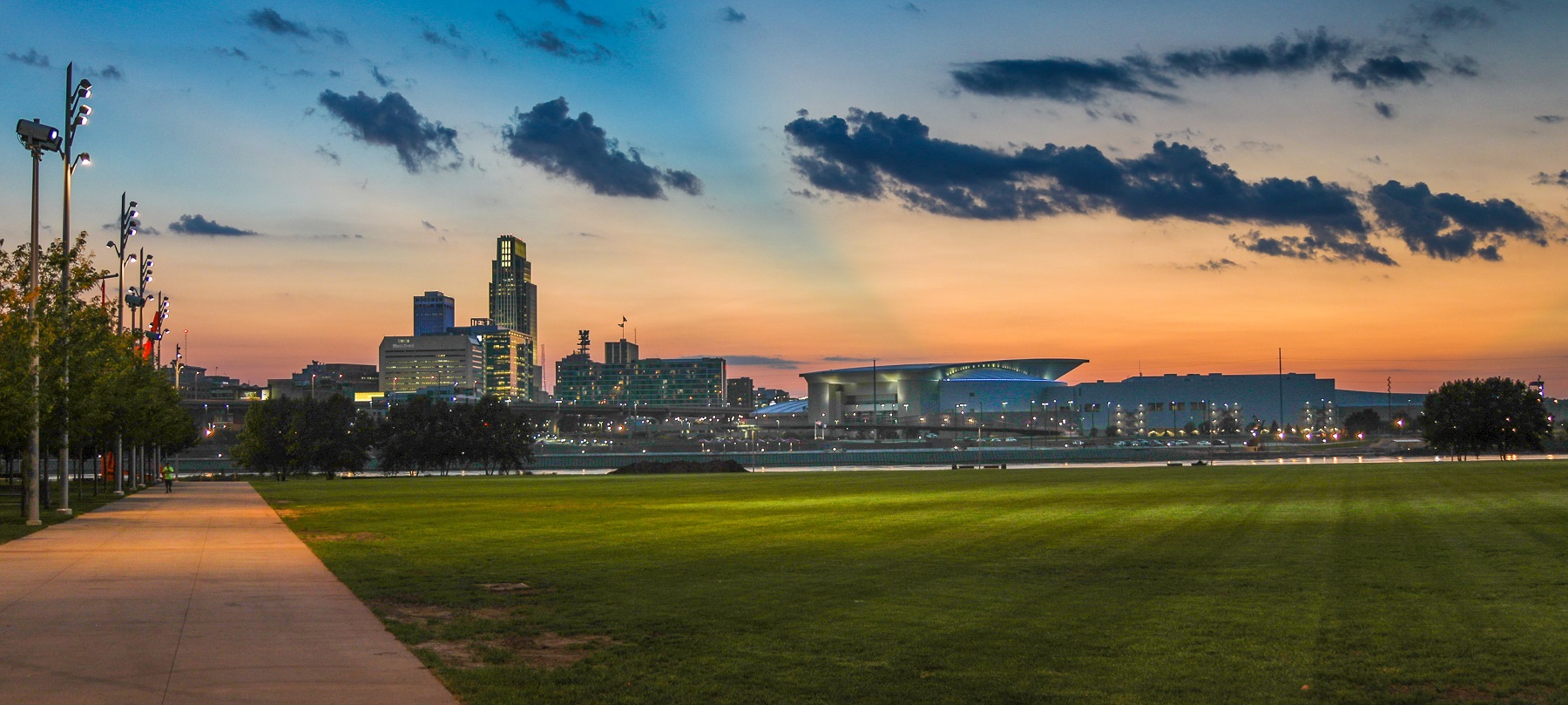
Omaha is the largest city in the US state of Nebraska. The area was visited by the Lewis and Clark Expedition in 1804, and in the following decades several trading posts were established here. In 1846, Mormons established the temporary city of Cutler’s Park in the northern part of present-day Omaha. In 1854, Omaha was established as a city, and it was named after one of the region’s Indian tribes, whose land had been acquired by the US state from the same year.

Soon after, Omaha became the capital of the Nebraska Territory, but when the territory became a state in 1867, the capital was moved to nearby Lincoln. The city grew rapidly, and railroads were built to Omaha in the 1860s and they brought further growth. In the following several decades, Omaha’s large-scale meat production was established as the leading industry.

Read more about Omaha


Des Moines, Iowa, USA

Des Moines

Des Moines is the largest city and the capital of the US state of Iowa. The town is located where the Raccoon River flows into the Des Moines River, where Captain James Allen established a fort in 1843. Allen wanted to name the site Fort Raccoon, but the U.S. The War Department preferred Fort Des Moines. In 1846 the fort was abandoned due to a reduced threat from Indian tribes, and in the same year settlers arrived at the fort, and in 1851 Fort Des Moines formally became a city, which from 1857 was simply called Des Moines.

That same year, the city became the capital of Iowa, instead of Iowa City. Des Moines grew to 22,000 residents in 1880, and in the latter half of the 1800s, the coal mining industry brought great growth to the city. At the beginning of the 20th century, Des Moines was developed with large beaux-arts buildings as part of a City Beautiful project, and in the 1930s construction was initiated as part of Roosevelt’s New Deal.

Read more about Des Moines


Pierre, South Dakota, United States, USA

Pierre

Pierre is the picturesque capital city of South Dakota. It is located along the banks of the Missouri River, and it’s history dates back to 1880 when it was founded on the east bank of the river, opposite Fort Pierre. The fort and the city was named after Pierre Chouteau Jr., who was a prominent fur trader. The city grew and became a center for trade and transportation. South Dakota was admitted as a state in 1889, and Pierre was chosen as the state capital due to its central location. It has developed ever since, and Pierre is today home to both historical landmarks and modern buildings.

The most iconic landmark in Pierre is the impressive South Dakota State Capitol. It was completed in 1910, and the grand building features a blend of Classical Revival and Renaissance Revival architectural styles. The Capitol’s great dome and beautifully landscaped grounds are great sights, including the Flaming Fountain veterans’ memorial. Inside, you can admire murals and sculptures in the central rotunda.

Read more about Pierre


Minneapolis, Minnesota, United States, USA

Minneapolis

Minneapolis is the largest city in the US state of Minnesota, and it is known together with the neighboring city as the Minneapolis-Saint Paul metropolitan area. In 1819, the US Army established Fort Snelling in the area, and from the middle of the 1800s, settlers from not least Scandinavia and Germany came here, and the Minnesota Territorial Legislature approved the establishment of Minneapolis in 1856.

In 1867, Minneapolis formally became a city, and five years later the city of Saint Anthony on the east side of the Mississippi was merged with Minneapolis. The city’s growth was not least due to large mills that utilized the St Anthony Falls for energy production, and which served the agriculture and grain producers of western Minnesota and North Dakota.

Read more about Minneapolis


Fargo, North Dakota, United States, USA

Fargo

Fargo in North Dakota is a city with an interesting history and great sights. Founded in 1871, Fargo began as a small settlement where the Northern Pacific Railroad crossed the Red River. It was named after William G. Fargo, a director of the Northern Pacific Railroad and co-founder of Wells Fargo Express Company.

Hereafter the city quickly grew from a rough frontier town into a bustling hub of commerce and industry. By the end of the 1800s, Fargo had established itself as a centre in the region, attracting settlers with the promise of fertile farmland in the Red River Valley.

Read more about Fargo

Geolocation

In short

Sioux Falls, South Dakota Sioux Falls, South Dakota[/caption]

Overview of Sioux Falls

Sioux Falls is the largest city in the US state of South Dakota. The town’s history started in 1856, when two groups from The Dakota Land Company and the Western Town Company claimed lands around the Great Falls of the Big Sioux River. The groups worked together and established themselves, and in the first winter 17 men stayed on site. The 17 became more, but the settlement was abandoned in due to the Sioux uprising in 1862. In May 1865, Fort Dakota was established in what is today downtown Sioux Falls.

Many former residents returned along with more settlers, and the city grew and formally became a city in 1883. In the same decade, the railroad came to town and the population quickly quadrupled to over 10,000. Growth continued in the 20th century with the establishment of industries, agricultural production and a military base in the first half of the century and trade and services in recent decades.

Today you can explore a modern city where you can take some nice walks along the Big Sioux River and through downtown to see the city’s sights. The most famous building is the Minnehaha County Building, built in 1890 to house the regional government for Minnehaha County. The building style is an example of the so-called Richardson Romanesque architecture, named after the American architect Henry Hobson Richardson.

About the Sioux Falls travel guide

Contents: Tours in the city + tours in the surrounding area
Published: Released soon
Author: Stig Albeck
Publisher: Vamados.com
Language: English

About the travel guide

The Sioux Falls travel guide gives you an overview of the sights and activities of the American city. Read about top sights and other sights, and get a tour guide with tour suggestions and detailed descriptions of all the city’s most important churches, monuments, mansions, museums, etc.

Sioux Falls is waiting for you, and at vamados.com you can also find cheap flights and great deals on hotels for your trip. You just select your travel dates and then you get flight and accommodation suggestions in and around the city.

Read more about Sioux Falls and the United States

United States Travel Guide: https://vamados.com/usa
City tourism: https://visitsiou-xfal-ls.com
Main Page: https://www.vamados.com/

Buy the travel guide

Click the “Add to Cart” button to purchase the travel guide. After that you will come to the payment, where you enter the purchase and payment information. Upon payment of the travel guide, you will immediately receive a receipt with a link to download your purchase. You can download the travel guide immediately or use the download link in the email later.

Use the travel guide

When you buy the travel guide to Sioux Falls you get the book online so you can have it on your phone, tablet or computer – and of course you can choose to print it. Use the maps and tour suggestions and you will have a good and content-rich journey.


Travel Expert

Stig Albeck

Gallery

Gallery

Other Interesting Guides

Similar to Sioux Falls Travel Guide