
Erfurt

50.98477, 11.02988

Erfurt Travel Guide

Travel Author

Stig Albeck

City Map

City Introduction

Erfurt is located on the river Gera and is the capital of the German state of Thuringia. It is an old town that was mentioned already from the 8th century. Later, the city temporarily became the home of Martin Luther, who was a priest in Erfurt’s cathedral before he moved to Wittenberg. Later, Erfurt became historic when the first meeting between government leaders from the GDR and West Germany took place at the Hotel Erfurter Hof in 1970.

The old town of Erfurt, Altstadt, is one of the best-preserved medieval towns in Germany, and there are many sights in the cozy streets. One of the best-known is the Krämerbrücke, a bridge from 1325 built with half-timbered houses on both sides of the cobblestoned road in the middle. Immediately west of the Krämerbrücke you can see the Alte Synagoge, which like the bridge also dates from around 1300.

There are also beautiful squares in Erfurt, such as the Fischmarkt, where you can see the city’s neo-Gothic town hall from the end of the 19th century. In the square you can also see Erfurt’s Roland statue, which was erected as a symbol of the city’s freedom and independence. You can also go to the square Anger, where there are a number of shops and the art museum Angermuseum, which has various art forms in the collection.

In Erfurt you should also make a trip to Domberg, where Erfurt’s cathedral and the church Severikirche are located next to each other. The cathedral is the oldest and most important church in Erfurt, and the home of the Gloriosa bell, which is the largest surviving medieval bell of its type in the world. With a total of six towers of the two churches, they form Erfurt’s landmark as a distinct silhouette in the city’s skyline.

Top Attractions

Krämer Bridge
Krämerbrücke

The Krämerbrücke is a bridge that stands as Erfurt’s most famous structure. It was built in stone in 1325 after earlier wooden bridges were destroyed by fire. The bridge quickly became the center of the city’s trade, as it connected the most important trade routes between East and West. In the Middle Ages, the bridge was inhabited by merchants, especially the peddlers who gave the bridge its name, who sold goods from small shops. Today, the Krämerbrücke is the longest fully built and inhabited bridge in Europe and a unique cultural and historical attraction.

The bridge is 120 meters long and consists of stone foundations with 32 arches spanning the Gera River. On top of it stand 32 half-timbered houses from the 15th to 18th centuries. Most of the houses are narrow and tall structures, giving the impression of a medieval street rather than a bridge. Many of the houses have been beautifully restored and now house small shops, galleries and workshops. The architecture combines a Gothic basic structure with later Renaissance and Baroque details.

Today, the Krämerbrücke is one of Erfurt’s biggest tourist attractions and part of the historic city centre. Every year, the Krämerbrückenfest is held, attracting thousands of visitors. The bridge is therefore a living monument that is an active part of the Erfurt experience.


Fish Market
Fischmarkt

The Fischmarkt is Erfurt’s central marketplace, where trade in fish, grain and other goods took place from the Middle Ages onwards. The square was a hub for trade between north and south and over the years was surrounded by representative buildings that reflected the prosperity of the citizens. It was during the Renaissance and Baroque that the Fischmarkt acquired its characteristic character of richly decorated town houses.

The buildings on the square are particularly well-known for their rich Renaissance-style facades, often with stucco, sandstone ornaments and colourful paintings. One of the most striking buildings is the Zum Roten Ochsen from 1562, whose facade is decorated with figures and coats of arms. In the middle of the square you can see a copy of the statue of Erfurter Roland, a symbol of the city’s trading rights.


Town Hall
Rathaus

Erfurt’s current town hall was built in the 1870s to replace an older town hall from the Middle Ages that had become too small for the city’s growing administration. The construction coincided with a period when Erfurt was integrated into Prussia and grew as an industrial city. The town hall quickly became a symbol of the city’s new self-understanding and the modernity that emerged in the second half of the 19th century.

The town hall was built in neo-Gothic style, inspired by medieval town halls in northern Germany. The facade has pointed gables, towers and richly decorated windows, which create an almost cathedral-like impression. Inside there are large halls with murals depicting scenes from Erfurt’s history and legends. The Festsaal in particular is known for its artistic decoration.

The Rathaus still houses the city administration, as the name suggests, but is also open to the public, so you can take a look at the impressive halls in the old building for yourself. The town hall also serves as a setting for concerts, lectures and ceremonies, and is one of the most striking buildings on the central square, Fischmarkt.


Old Synagogue
Alte Synagoge

The Alte Synagoge in Erfurt was built around 1100 and is thus one of the oldest preserved synagogues in Europe. The building was expanded in the 13th and 14th centuries, until the pogroms of 1349 brought an abrupt end to the development of the Jewish community in the city. Subsequently, the synagogue was used for various purposes, including as a warehouse and dance hall, which unwittingly helped to preserve it.

The building contains Romanesque and Gothic elements such as thick stone walls, pointed windows and vaulted halls. Several of the original details, including window frames and brickwork, are still visible. Today, the Alte Synagoge functions as a museum, where you can see the famous Erfurter Schatz as a highlight. It is a collection of medieval silver jewelry, coins and objects that were hidden during the pogroms. The museum also tells the story of the Jewish community in Erfurt through time.


Angermuseum

The Angermuseum opened in 1886 as Erfurt’s first public art museum. It was housed in a Baroque building that had originally served as a warehouse and armory. The museum was founded on the basis of private collections and quickly grew to become an important institution in the state of Thuringia.

The building was built in 1705 in Baroque style with a symmetrical facade, high central pediment and classical ornaments. Inside, the rooms are adapted for art exhibitions with high halls, large windows and a central staircase. The collection includes works from medieval religious art to modern paintings and graphics. A particular highlight is the extensive collections of works from German Romanticism and Expressionism.


Cathedral Hill
Domberg

The Domberg is the name of the cathedral hill in Erfurt, and it has been a religious center in the city since the early Middle Ages. Church buildings were already located on the site in the 8th century, and during the Middle Ages the hill was built with a cathedral, monasteries and residences for clergy. For centuries, the Domberg was the spiritual and political center of the city.

Domberg is dominated by two monumental buildings, located side by side. These are the Erfurt Cathedral and the Severikirche. The 70-step staircase leads up to the plateau, where you get an impressive panoramic view of the city. The area is characterized by Gothic and Romanesque architecture, and the medieval buildings still stand close to the churches.

Domberg is today one of Erfurt’s biggest landmarks and the center of many cultural events, including the famous Domstufen-Festspiele, where classical operas and plays are performed on the steps in front of the cathedral. The area is also a popular tourist attraction, where you can experience centuries of architectural history in one place, and where the large churches dominate.


Erfurt Cathedral
Erfurter Dom

Erfurt Cathedral, also known as St. Mary’s Cathedral, is the city’s Catholic cathedral. Its history dates back to 742, when the missionary Boniface founded a bishopric in Erfurt. The first church on the site was a small wooden building, which was later replaced by a stone building in the Romanesque style. In 1154, the church was elevated to a collegiate church, which meant that it gained great importance as the center of church life in Thuringia. During the Middle Ages, Erfurt grew into a rich trading city, and the church elite wanted a representative cathedral.

The current Gothic Erfurt Cathedral was therefore built from the 14th to the 15th century, when the choir building and the high vaults in particular were built as an expression of the city’s prosperity. Erfurt Cathedral also became an important place in the history of the Reformation, as Martin Luther was ordained here in 1507, which closely links the church to one of Europe’s greatest religious upheavals.

Erfurt Cathedral is a masterpiece of High Gothic architecture, but bears traces of several styles from its long history of construction. The cathedral’s impressive west tower rises above the city and can be seen from afar, while the large choir windows with stained glass from the 14th century are considered among the most important medieval stained glass windows in Germany.

Inside, the cathedral is characterized by enormous vaulted ceilings, slender columns and a solemn, light-filled atmosphere. One of the most famous elements is the 11-ton Gloriosa bell, cast in 1497 by master bell-maker Geert van Wou. The Gloriosa is considered the world’s largest free-swinging medieval bell and is valued for its particularly pure sound. The cathedral also contains a number of Gothic and Baroque altars, valuable frescoes, sculptures and choir stalls, which together bear witness to almost a thousand years of art history.

Today, Erfurt Cathedral is both an active church and one of Thuringia’s most important cultural heritage monuments. It is used for regular services, festivals and church activities, but also serves as a place where culture and religion meet. The cathedral is known as the setting for the annual Domstufen-Festspiele, where large-scale opera productions and classical concerts are performed on the monumental steps in front of the cathedral, attracting thousands of visitors from all over the world.


Severi Church
Severikirche

The Severikirche in Erfurt, officially called Kirche St. Severi, is a Protestant church dedicated to the holy bishop Severus of Ravenna, and dates back to the 12th century. The current building was begun in the early 14th century after a previous Romanesque church had been demolished. It was completed during the 15th century. The church was built as a monastery for the Augustinian Order and served as their religious center for centuries.

After the Reformation, monastic life was dissolved, but the Severikirche survived as an active parish church during a time when Erfurt largely followed Luther and the ideas of the Reformation. The Severikirche became Protestant, while the Erfurt Cathedral remained Catholic. This long history means that the Severikirche both has roots in the Romanesque tradition and stands as one of the most important Gothic church buildings in Thuringia.

The Severikirche is distinguished by its striking location on the Domberg, where it stands right next to the Erfurt Cathedral and together with it forms one of Germany’s most iconic church complexes. The church is a three-nave Gothic hall church structure, where the nave and side aisles are almost the same height, which creates a special spaciousness and light effect. The building is particularly known for its elongated nave, its five-sided choir and the five slender spires, which give the silhouette a light and sky-striking feel.

Inside, you will find, among other things, a richly decorated Gothic baptismal font from 1467, which is considered a masterpiece of medieval stone art. Frescoes, wooden sculptures and Baroque additions also bear witness to how the church has been continuously renewed over the centuries, without losing its basic Gothic character.

Today, the Severikirche still functions as a parish church, and it has become Protestant. It is a central part of Erfurt’s cultural identity and stands, together with Erfurt Cathedral, as the city’s most photographed landmark. Its location on the Domberg, where the two churches flank the wide Domstufen staircase, makes the place a natural stage for large events – especially the annual Domstufen-Festspiele, where thousands of guests gather in front of the backdrop of the two medieval churches.

Other Attractions

Day Trips

Landgericht, Halle

Halle

Halle is one of the largest cities in the state of Saxony-Anhalt. It is located on the river Saale and was historically known for a large production of salt, which fed the city’s economy. Halle later became a member of the Hanseatic League, and in the 16th century the city became one of the important places for Martin Luther’s reformation. Today, Halle is the home of the educational institution Martin-Luther-Universität Halle-Wittenberg.

Halle is a city with many sights and a beautiful old quarter. The center is the square Marktplatz, and you can e.g. see the Marktkirche from the 16th century and the unique Roter Turm, which is the city’s landmark. Roter Turm was primarily built in the 15th century as a tower for a now historic church on the site. As a detail, you can see Halle’s Roland statue at the Roter Turm, and the city’s beautiful town hall is also located on the Marktplatz.

More about Halle


Bundesverwaltungsgericht, Leipzig

Leipzig

Leipzig is a city with long and proud traditions in trade. It was here that the trade routes Via Regia and Via Imperii crossed each other, thereby connecting most of Europe through Leipzig. Trade created a wealthy city, which for a period was also one of the European strongholds for culture and education.

There are many beautiful and impressive buildings in Leipzig, where you can enjoy architecture from many eras. The city’s old town hall stands as one of Germany’s finest Renaissance buildings, and you can also see fine examples from the Baroque and later architectural styles, not least from historicism.
More about Leipzig


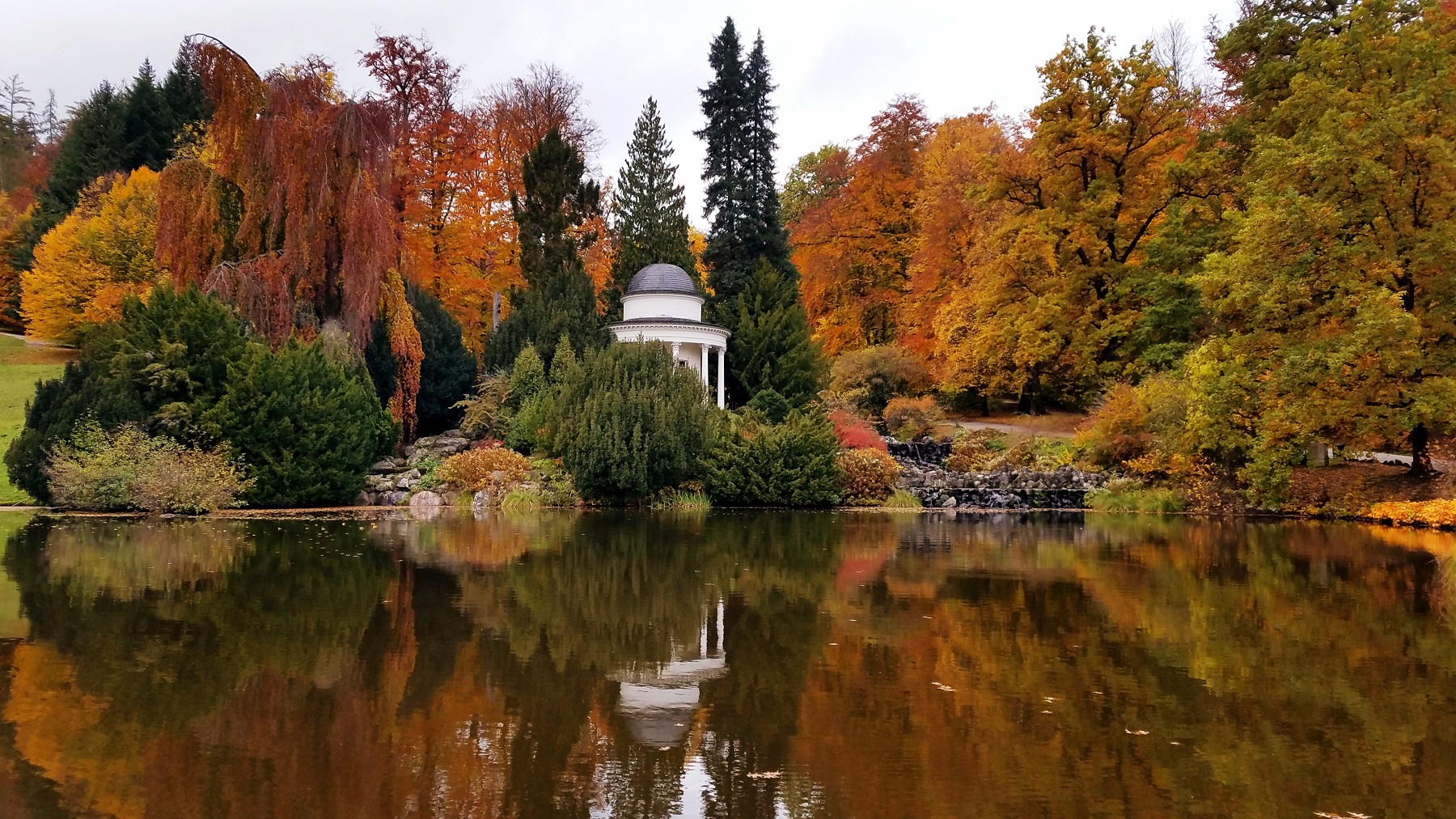
Bergpark Wilhelmshöhe, Kassel

Kassel

Kassel is an old town known from the 10th century, where the area had a fortress by the river Fulda. Kassel obtained city rights in 1189, and in the 16th century the city became the capital of the County of Hesse-Kassel. Kassel became the center of Calvinist Protestantism in Germany, and the city was fortified as a defense against Catholics. Later, it became the home of the Brothers Grimm, who collected and wrote many of their fairy tales here.

The vast majority of Kassel was destroyed during World War II and not rebuilt. Kassel is therefore today a city with a center of post-war architecture. There are, however, some individual buildings that were rebuilt, such as the Museum Fridericianum, where one of mainland Europe’s first public art museums opened in 1779. You can also see the Martinskirche church in an interesting combination of new and old architecture.
More about Kassel

Geolocation

In short

Erfurt, Germany

Erfurt, Germany

Overview of Erfurt

Erfurt is located on the river Gera and is the capital of the German state of Thuringia. It is an old town that was mentioned already from the 8th century. Later, the city temporarily became the home of Martin Luther, who was a priest in Erfurt’s cathedral before he moved to Wittenberg. Later, Erfurt became historic when the first meeting between government leaders from the GDR and West Germany took place at the Hotel Erfurter Hof in 1970.

The old town of Erfurt, Altstadt, is one of the best-preserved medieval towns in Germany, and there are many sights in the cozy streets. One of the best-known is the Krämerbrücke, a bridge from 1325 built with half-timbered houses on both sides of the cobblestoned road in the middle. Immediately west of the Krämerbrücke you can see the Alte Synagoge, which like the bridge also dates from around 1300.

There are also beautiful squares in Erfurt, such as the Fischmarkt, where you can see the city’s neo-Gothic town hall from the end of the 19th century. In the square you can also see Erfurt’s Roland statue, which was erected as a symbol of the city’s freedom and independence. You can also go to the square Anger, where there are a number of shops and the art museum Angermuseum, which has various art forms in the collection.

About the Erfurt travel guide

Contents: Tours in the city + tours in the surrounding area
Published: Released soon
Author: Stig Albeck
Publisher: Vamados.com
Language: English

About the travel guide

The Erfurt travel guide gives you an overview of the sights and activities of the German city. Read about top sights and other sights, and get a tour guide with tour suggestions and detailed descriptions of all the city’s most important churches, monuments, mansions, museums, etc.

Erfurt is waiting for you, and at vamados.com you can also find cheap flights and great deals on hotels for your trip. You just select your travel dates and then you get flight and accommodation suggestions in and around the city.

Read more about Erfurt and Germany

France Travel Guide: vamados.com/germany
City tourism: visiter-furt.de

Main Page: https://www.vamados.com/

Buy the travel guide

Click the “Add to Cart” button to purchase the travel guide. After that you will come to the payment, where you enter the purchase and payment information. Upon payment of the travel guide, you will immediately receive a receipt with a link to download your purchase. You can download the travel guide immediately or use the download link in the email later.

Use the travel guide

When you buy the travel guide to Erfurt you get the book online so you can have it on your phone, tablet or computer – and of course you can choose to print it. Use the maps and tour suggestions and you will have a good and content-rich journey.


Travel Expert

Stig Albeck

Gallery

Gallery

Other Interesting Guides

Similar to Erfurt Travel Guide