Kielce

50.86608, 20.62857

Kielce Travel Guide

Travel Author

Stig Albeck

City Map

City Introduction

Kielce is a city whose history goes back many centuries. It is not known when the city was founded, but it obtained city status in 1384. Kielce then developed with setbacks during the 17th century Polish-Swedish war. From 1795 Kielce was Austrian, and twenty years later the city became part of the Russian Empire, which lasted until the First World War.

Kielce is today a Polish city, where different cultures over time have left their cultural and architectural mark on the city, which today has around 200,000 inhabitants and several interesting sights. The old part of the city is manageable to walk with all sights within walking distance from each other. As in many other Polish cities, the market square Rynek forms the center, and it is a great place to start a tour.

On the Rynek, Kielce’s neoclassical town hall from the 19th century stands to the west, and the other sides of the square are developed with low buildings, where there are a number of cafes and restaurants with cozy outdoor seating in the season. Close to this is the main street Henryka Sienkiewicza, which connects the city’s railway station and cultural center. You can visit the city museum Muzeum Historii Kielc as well, which tells the story of the city.

In the center you can also enjoy a stroll to the most famous sights that can be seen on the castle mound Wzgórze Zamkowe. You can visit Pałac Biskupi, which was built as the summer palace of the bishops of Kraków, and which today is the national museum with exhibitions in the fields of painting, crafts, folk art, archeology and natural sciences. At the palace you can also see Kielce’s cathedral, which was built in the Baroque style in the 18th century.

Top Attractions

Market Square
Rynek

The Rynek in Kielce was laid out in the 14th century in connection with the establishment of the city and has since been the center of trade and administration. The area originally functioned as a market square with stalls and a town hall in the middle of the square. After a major fire in 1800 that destroyed large parts of the buildings, the Rynek was restructured. The foundations of the old town hall can still be seen in the paving. At the beginning of the 21st century, the square underwent extensive revitalization with new granite paving, lighting and the restoration of the historical pręgierz as a detail.

A pręgierz is a historical punishment pillar that was used in many Polish cities from the Middle Ages until the 19th century. It typically consisted of a stone or wooden pillar placed in the market square, where convicted persons were publicly bound with iron rings or chains, and the punishment could consist of being exposed to ridicule and shame, whipped or inflicted with minor corporal punishment in front of the citizens of the city. Pręgierz served both as a concrete instrument of punishment and as a symbolic reminder of the city’s law and order.

Architecturally, the square is dominated today by surrounding buildings from the 19th and early 20th centuries, many of whose facades have been given neo-Baroque and eclectic features. The so-called Sołtyk House, Kamienica Sołtyków, from 1765 is among the older preserved town houses and bears witness to the continuity of the area’s settlement. Several houses were built after city fires in the 19th century and bear traces of the reconstruction period, when Kielce developed into an important regional city. The shape of the square differs from many other Polish squares, as it is not square, but trapezoidal. This is due to the older street structures and neighborhoods that grew together around, among other things, the city’s churches.


Town Hall
Ratusz

Ratusz is the town hall of Kielce. The first of its kind was built in the first half of the 16th century and was located in the middle of the Rynek. It was a two-storey building with a southern tower, which housed prison cells. In front of it stood the city’s so-called pręgierz, which was used for public punishment. The building was destroyed during the fire of 1800 and demolished in 1818, when it stood in ruins.

In 1834, it was decided to build a new town hall in a building on the western side of the Rynek. For this purpose, two properties were combined into one functional unit. This building housed the city’s administrative offices, the prison and the guardhouse. In the second half of the 19th century, the house was rebuilt in the Neo-Renaissance style, which gave the facade a representative appearance. The zinc roof and the facade decorations were designed by a state architect.

After World War II, the town hall was restored, but the previous Neo-Renaissance elements were simplified, so that the facade took on a more classicist look. Today, the building stands as a striking frame for the Rynek and symbolizes the changing styles that have characterized Kielce’s architecture. The old 16th-century Town Hall can no longer be seen, but its outline is visualized in the paving of the Rynek.


Ulica Henryka Sienkiewicza

Ulica Henryka Sienkiewicza is Kielce’s main street and main shopping street. It was laid out in the mid-19th century and originally served as a connecting road between the railway station and the city center. The street changed its name several times, but in 1919 it received its current name in honor of the writer Henryk Sienkiewicz. With a length of about 1.3 kilometers, it is a striking feature of the center of Kielce.

A number of townhouses were built along the street in the late 19th and early 20th centuries. The architecture is characterized by eclecticism, classicism and Art Nouveau, reflecting the economic growth of Kielce during this period. Several buildings were designed by local architects and built as residential buildings with shops on the ground floor. Today, Ulica Henryka Sienkiewicza is the center of city life with shops, cafes, theaters, and cultural institutions.


Kielce Historical Museum
Muzeum Historii Kielc

Muzeum Historii Kielc is a city museum founded on the basis of local historical collections that were started in 1908. The museum is housed in a building from the 1840s that originally belonged to a credit institution. The museum is a good place to visit if you want to learn more about the city and its development, and a visit to the museum can be a good starting point for exploring the streets of Kielce afterwards.

The museum’s permanent exhibition depicts the history of Kielce from the earliest settlements through the Middle Ages and the period under the bishops of Kraków to industrialization in the 19th century and the city’s role in the 20th century. The objects include the city seal, council minutes, craft tools, paintings, uniforms, photographs and other things, which together document the development of the city. There is also a focus on themes such as the city’s Jewish community, the war years and the economic and social changes in recent times.


Castle Hill
Wzgórze Zamkowe

Wzgórze Zamkowe or Castle Hill is one of the oldest and most important historical areas in Kielce. The area takes its name from the Bishops’ Palace, Pałac Biskupów Krakowskich, which was built between 1637 and 1641 as the residence of the bishops of Kraków, and which today houses the city’s National Museum. The palace was placed on the ridge as a dominant structure together with the cathedral and the associated church buildings. The location of the hill had both strategic and symbolic importance, as it raised the complex above the rest of the buildings and marked the religious and administrative center of the city.

In addition to the bishop’s palace, Wzgórze Zamkowe also houses the Bazylika Katedralna Wniebowzięcia Najświętszej Maryi Panny, the city’s most important church. The cathedral and the palace, together with smaller church buildings and former administrative facilities, form a historical ensemble that served as an episcopal seat for centuries. The hill thus represents both religious power and secular administration, and the architectural ensemble provides a unique impression of the city’s development since the Middle Ages.

In recent times, parts of Wzgórze Zamkowe have been linked to other functions. In the 19th and 20th centuries, some of the buildings on the hill were used for state and municipal purposes, including as prison buildings. In the 21st century, these parts of the building were converted into cultural institutions, where the Ośrodek Myśli Patriotycznej i Obywatelskiej conveys the city’s political and patriotic history, and the Instytut Dizajnu functions as a center for modern design and creativity.

Architecturally, Wzgórze Zamkowe today appears as a mixture of older and newer layers. The Baroque bishop’s palace has been preserved as one of the most representative buildings in the region, while the former institutional buildings have been restored with respect for their simple masonry and functional expression. At the same time, modern elements such as glass entrances and exhibition rooms have been added, giving the area a new use without removing the historical traces. Today, the castle hill is both a historical monument and a dynamic center of culture and communication in Kielce.


Bishops’ Palace
Pałac Biskupów Krakowskich

Pałac Biskupów Krakowskich is the palace of the bishops of Krakow, which was originally built between 1637 and 1644 as the residence of Bishop Jakub Zadzik. The architecture is characterized by Italian mannerism and Baroque with a symmetrical structure consisting of a main building with four corner towers. In the 18th century, the complex was expanded with side wings, which changed the courtyard and provided access to the adjacent gardens.

Inside, the palace contains noteworthy interiors such as a painted beamed ceiling from the 1640s, made in Dolabella’s workshop, stucco decorations, fireplaces and portals in Baroque style. The large dining room is decorated with a portrait frieze of the bishops of Krakow, which provides an interesting look at the residents of the fine residence. These interiors are among the best-preserved examples of Baroque decorative art in the region and provide a unique insight into the building’s original splendor.

After periods of decay and changing uses, the palace was restored and turned into a museum. Today it houses the Kielce National Museum, Muzeum Narodowe w Kielcach, with permanent collections, historical interiors and temporary exhibitions. The Baroque garden, laid out in geometric patterns with fruit trees, was reconstructed at the beginning of the 21st century, which has restored the palace’s integrity as a residence and representative building. During a visit, one should enjoy a walk in the beautiful park, from which there is a beautiful view of the bishops’ building.


Kielce National Museum
Muzeum Narodowe w Kielcach

Muzeum Narodowe w Kielcach is the name of the National Museum in Kielce. It has its main branch in the Bishops’ Palace, located on the Castle Hill in the city. The history of the institution dates back to the beginning of the 20th century, when local collectors and scientific societies began to build collections of art and archaeology. The museum was officially established in 1971 and today includes several departments spread across the city.

The collections include Polish and European painting from the 17th to the 20th centuries, and you can see works by Bernardo Bellotto, Józef Brandt and Jacek Malczewski, among others. There are also extensive archives of historical documents, photographs and handicrafts. An important part of the museum’s exhibitions is dedicated to the history of Kielce itself and the culture of the Świętokrzyskie region.


Cathedral Basilica of the Assumption of the Blessed Virgin Mary
Bazylika Katedralna Wniebowzięcia Najświętszej Maryi Panny

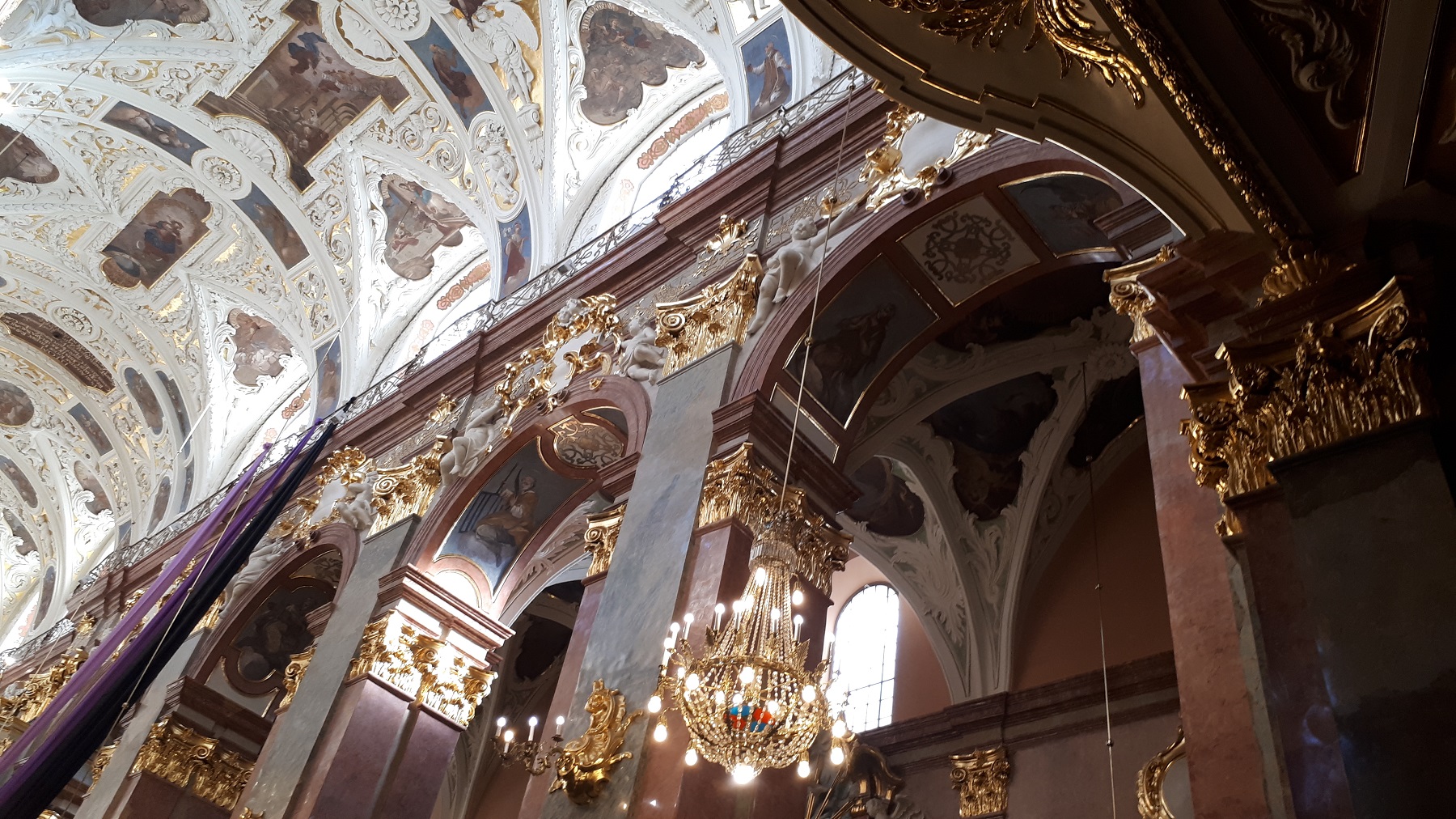
The Cathedral Basilica is Kielce’s cathedral, which is also one of the oldest buildings in the city, having been founded in the 12th century by Bishop Gedeon. The first church was Romanesque and was built of local limestone with a single nave, semicircular apse and thick walls, which supported a flat roof. This basic form was later changed and expanded in line with the growth of the city and the increasing importance of the church. Already in the Middle Ages, Gothic elements were added in the form of vaulted chapels and reinforced walls, which gave the building a more monumental appearance.

At the beginning of the 17th century, the cathedral underwent extensive reconstruction under Bishop Jakub Zadzik. The Romanesque basic structure was preserved, but the interior was decorated in Baroque style with stucco decorations, frescoes and new side chapels. The high altar from this period was designed in Baroque style with paintings commissioned by the bishop himself, and it is still one of the most striking elements of the church.

A free-standing bell tower was built next to the cathedral to the north, which is today a characteristic part of the structure. The ground plan of the cathedral itself remained a nave without a transept, and the exterior of the building is today characterized by a simple rectangular shape, combining Romanesque and Baroque features. Several renovations in the 19th and 20th centuries ensured the preservation of both the medieval walls and the later Baroque decorations. Today, the cathedral continues to serve as the episcopal seat of the Diocese of Kielce.


Church of St. Adalbert
Kościół św. Wojciecha

Kościół św. Wojciecha or Church of St. Adalbert is located in Kielce on a site where, according to tradition, a wooden church existed as early as the 11th century. The current stone church was built in the 18th century, replacing earlier wooden and masonry structures that had deteriorated over time. The architecture of the church is simple and built in the Baroque style with an elongated nave and a small tower above the entrance.

For centuries, the church served as the parish church of one of the oldest quarters of the city, which developed outside the cathedral area. In the 19th century, the interior was renovated, and side altars with sculptures and paintings by local artists were added. The building was also used as a center for folk festivals and processions, which gave it a special significance in the life of the city. In the 20th century, the church underwent several restorations, including those necessary after damage during World War II.


Stefan Żeromski Theatre
Teatr im. Stefana Żeromskiego

Teatr im. Stefana Żeromskiego is Kielce’s classical theatre. It was founded in 1879, making it one of the oldest permanent theatre institutions in south-eastern Poland. The building was originally built as a cultural centre and was inaugurated as a theatre shortly afterwards. The architecture is characterised by 19th-century historicism with a simple façade and a classically designed entrance, and the interior was furnished with a balcony, boxes and stage according to the standards of provincial theatres of the time.

In 1945, the theatre was named Teatr im. Stefana Żeromskiego in honour of the Polish writer who often depicted social conflicts and bourgeois environments in his works. Since then, the institution has developed into an important venue for modern Polish drama as well as classical performances. The building has undergone several renovations, modernising stage technology and audience facilities, while preserving the historical setting while adding new functions.


Kadzielnia Nature Reserve
Rezerwat Przyrody Kadzielnia

Kadzielnia is a protected nature reserve located relatively close to the southern part of the city center of Kielce. The area consists of a limestone outcrop that was previously exploited as a quarry. The site is geologically important, as the rocks clearly show layers from the Devonian period, and many fossils of corals and other marine animals have been found here.

The quarry was abandoned in the 1900s, after which the area was developed as a recreational facility. In the center of the reserve is a large open-air stage, built in the 1960s, which is used for concerts and festivals. In addition, trails and viewpoints have been created, from which you can see the steep rock walls, the likes of which are rarely seen in the center of modern cities.

A special attraction are the underground caves that were discovered in connection with the quarrying. These caves are today available to visitors as a guided tour, where you can experience the geology and unique underground formations. You can therefore visit the Kadzielnia Nature Reserve for a lovely walk in human-shaped nature and at the same time experience industrial history.

Other Attractions

Day Trips

Czestochowa, Poland

Częstochowa

Częstochowa is a city in southern Poland, located on the Warta River. It is an old town that dates back to the 11th century and is believed to have obtained status as a city in 1356. The town prospered in the 14th century, and the decades around the year 1500 was a booming time as well, since Częstochowa was allowed to charge money to cross the site’s bridge over the Warta. Later, industrialization contributed to great growth in the city.

The town plan of Częstochowa is characterized by the large square, Plac Władysława Biegańskiego, where the town hall and the city museum are located. From here, the wide and long street Aleja Najświętszej Maryi Panny goes both east and west, and it forms the central axis of the city. Near the eastern end of the street is Częstochowa’s old market square, the Rynek, and the city’s neo-Gothic cathedral. To the west, the Jasna Góra Monastery.

More about Częstochowa


Radom, Poland

Radom

Radom is one of Poland’s largest cities, and it is in the area south of the capital Warsaw. Radom developed as a settlement in the Middle Ages and obtained city rights in 1364. The town grew rapidly with the construction of a town hall, a royal residence and city walls. Many kings visited the city, which was venue for several political decisions such as nihil novi in ​​1505, which took place at the city castle. However, the period of growth came to an end with Sweden’s invasion in 1655.

Today there are several interesting sights in Radom. You can start with a stroll in the old part of town, where the market square Rynek forms the center of Radom. In the square you can see the city’s town hall from 1848, a monument to the Polish legions formed during the First World War, and you can visit the Jacek Malczewski Museum, which exhibits various art, archeology and natural sciences.

More about Radom


Krakow, Poland

Krakow

Krakow is a beautiful and charming city, which is Poland’s former royal capital and one of the country’s cultural strongholds. The city has cozy streets and squares that belong to the most charming of any European city. You will find an abundance of beautiful buildings and fine churches and much more.

The old royal and cultural center was the castle Wawel, where the rulers were forward thinking as one of the major cities in the country and region with, for example, one of Central Europe’s oldest universities. Krakow’s large and beautiful market square is another of the many places to visit while in the city.

More about Krakow

Geolocation

In short

Kielce, Poland Kielce, Poland[/caption]

Overview of Kielce

Kielce is a city whose history goes back many centuries. It is not known when the city was founded, but it obtained city status in 1384. Kielce then developed with setbacks during the 17th century Polish-Swedish war. From 1795 Kielce was Austrian, and twenty years later the city became part of the Russian Empire, which lasted until the First World War.

Kielce is today a Polish city, where different cultures over time have left their cultural and architectural mark on the city, which today has around 200,000 inhabitants and several interesting sights. The old part of the city is manageable to walk with all sights within walking distance from each other. As in many other Polish cities, the market square Rynek forms the center, and it is a great place to start a tour.

On the Rynek, Kielce’s neoclassical town hall from the 19th century stands to the west, and the other sides of the square are developed with low buildings, where there are a number of cafes and restaurants with cozy outdoor seating in the season. Close to this is the main street Henryka Sienkiewicza, which connects the city’s railway station and cultural center. You can visit the city museum Muzeum Historii Kielc as well, which tells the story of the city.

About the Kielce travel guide

Contents: Tours in the city + tours in the surrounding area
Published: Released soon
Author: Stig Albeck
Publisher: Vamados.com
Language: English

About the travel guide

The Kielce travel guide gives you an overview of the sights and activities of the Polish city. Read about top sights and other sights, and get a tour guide with tour suggestions and detailed descriptions of all the city’s most important churches, monuments, mansions, museums, etc.

Kielce is waiting for you, and at vamados.com you can also find cheap flights and great deals on hotels for your trip. You just select your travel dates and then you get flight and accommodation suggestions in and around the city.

Read more about Kielce and Poland

Poland Travel Guide: https://vamados.com/poland
City tourism: https://visitkiel-ce.pl
Main Page: https://www.vamados.com/

Buy the travel guide

Click the “Add to Cart” button to purchase the travel guide. After that you will come to the payment, where you enter the purchase and payment information. Upon payment of the travel guide, you will immediately receive a receipt with a link to download your purchase. You can download the travel guide immediately or use the download link in the email later.

Use the travel guide

When you buy the travel guide to Kielce you get the book online so you can have it on your phone, tablet or computer – and of course you can choose to print it. Use the maps and tour suggestions and you will have a good and content-rich journey.

Travel Expert

Stig Albeck

Gallery

Gallery

Other Interesting Guides

Similar to Kielce Travel Guide