
Loading

Spokane

47.65797, -117.42353

Spokane Travel Guide

Travel Author

Stig Albeck

City Map

City Introduction

Spokane is the largest city in eastern Washington State, and the metropolitan area around Spokane has about 600,000 residents. The town’s history dates back to 1810, when David Thompson explored the area and established Spokane House for the North West Company. Spokane House was a fur trading post, and it ensured a long-lasting presence that, after the completion of the Northern Pacific Railway in 1881, developed into the city of Spokane Falls, later simply called Spokane.

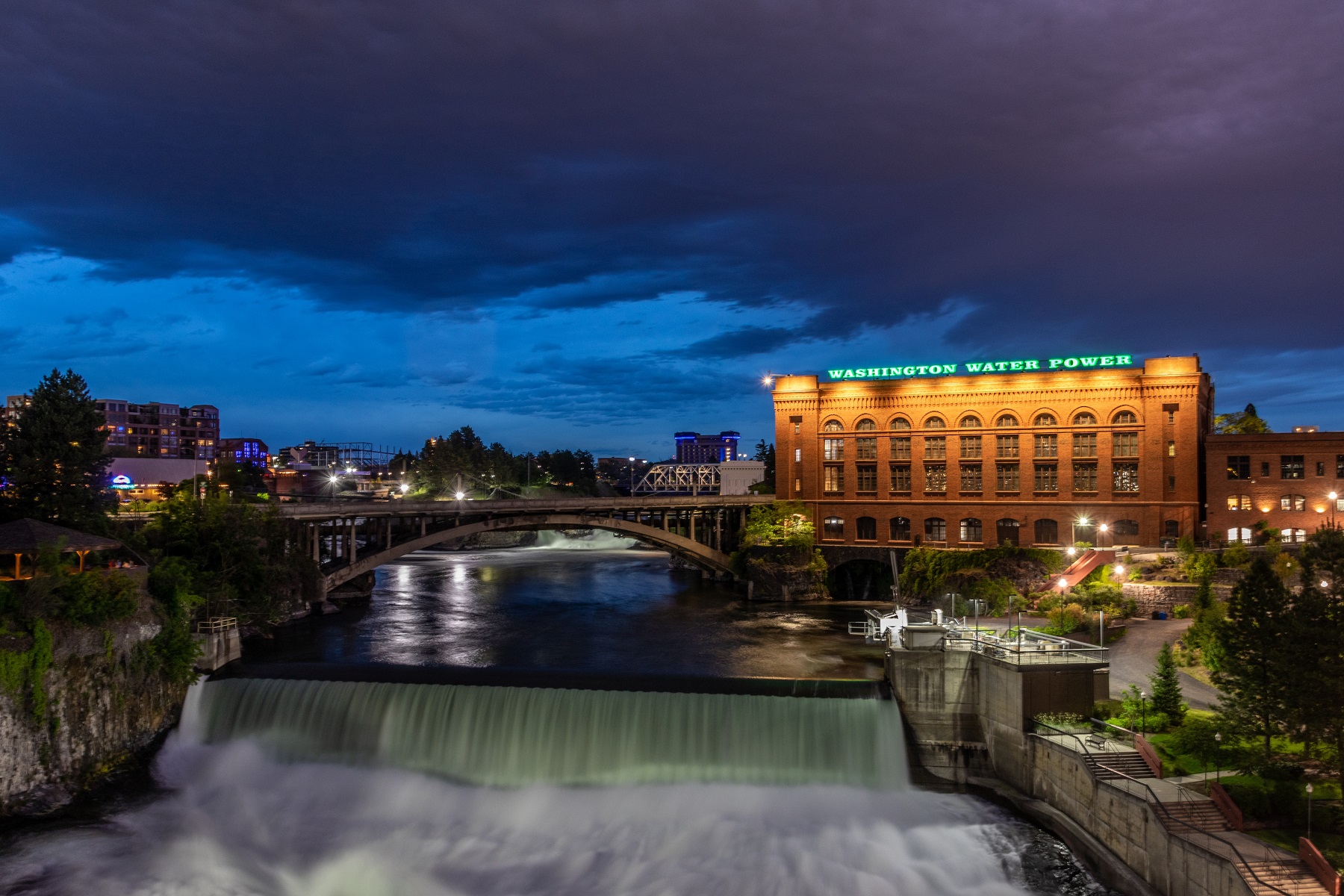
Today, you can see and visit several sights in Spokane. The Spokane River runs through the center of the city, and in the middle is Riverfront Park around the waterfalls that can be seen on this part of the river. The falls are some of the largest that can be seen in the heart of an American city, and you have a good view of them from the bridges over the Spokane River.

Riverfront Park was previously laid out as railroad yard and the area was home to Expo’74 before the present park opened in 1978. Highlights include the 1974 American Pavilion, the railroad-era Great Northern Clock Tower, and hydroelectric plants.

Downtown Spokane is a modern city center with many sights, activities, restaurants and shops. There are quite a few interesting buildings to notice. These include The Davenport Hotel from 1914 with an impressive lobby and the Bing Crosby theater from 1914 and the Fox from 1931. The Fox was built in Art Deco and is a sumptuous example of this style.

You can also visit impressive churches such as the Catholic Cathedral of Our Lady of Lourdes and the Episcopal Cathedral of St. John the Evangelist. The Northwest Museum of Arts & Culture provides an interesting insight into the area’s indigenous culture, while you can experience beautiful nature in Manito Park, which is a public park with an arboretum, botanical garden and conservatory.

Top Attractions

Riverfront Park

Riverfront Park is Spokane’s green and historic heart. It is a large park in the center of the city, which was created at the point where the river flows through the city and forms the impressive waterfalls, Spokane Falls. The park’s landscape with river, rocks and bridges provides a dramatic and beautiful nature in an urban environment, and you can experience the power and beauty of the waterfall from several vantage points. The combination of nature with walking paths, bridges and recreational spaces means that Riverfront Park functions as a free space in the middle of the hustle and bustle of the city in a rarely magnificent way.

Historically, Riverfront Park is notable because the area was previously covered by railroad tracks and industrial tracks. It was a busy route for freight transport and for the railroads in general, but in connection with the Expo’74 exhibition, the area was cleared, the tracks removed and the site transformed into a park. After the exhibition, the area was preserved as a green urban area with many of the buildings and structures erected from the exhibition as the centerpiece of the park’s modernization. The legacy of the old railroad era is still evident through, among other things, the Great Northern Clocktower, a tower that remains as a reminder that the area was once a transportation hub.

Today, the park offers a wealth of activities for both locals and visitors of all ages. There are walking trails, bridges over the river, open lawns, picnic areas, art and sculptures, playgrounds and modern amenities such as the SkyRide, a gondola lift that hovers over the waterfall and Spokane River. This makes the park very versatile, whether you just want to take a nice walk, let the kids play or enjoy nature and the water.


Manito Park

Manito Park is Spokane’s botanical gem. It is a large and beautifully landscaped park on the city’s South Hill, where you can experience varied gardens, green spaces and a peaceful environment. The park’s many gardens and areas contain everything from formal flower beds and rose gardens to a Japanese garden with a pond, perennials, trees and rocks, making Manito Park a diverse experience for those who love plants, landscape, nature and harmony. The park stretches over many hectares, and its green open spaces invite you to walk, meditate or simply enjoy the surroundings.

Manito Park’s history and importance to the city is clear. The area was established in the early 1900s and has over time been recognized as a historic area as part of the city’s conscious focus on green spaces for the public. Over time, playgrounds, picnic areas and ponds with bird life have been established. You can enjoy this in season, but at the same time the park changes character with the rhythm of the seasons. There is spring with flowering, summer with lushness, autumn with a play of colors in the leaves and winter with quiet snow-covered landscapes.


Northwest Museum of Arts and Culture

The Northwest Museum of Arts and Culture, also known as MAC, is the region’s leading cultural institution of its kind and an important gateway to the past, art and culture of Spokane and the surrounding area. At the museum, you can experience both art, history and culture from the Inland Northwest. The museum displays works of art from both contemporary and historical artists, and the exhibitions tell the story of the development of the area and the lives and traditions of the indigenous tribes through unique objects and stories. In addition, you can visit the historic Campbell House, where the interior and surroundings provide an authentic insight into life in Spokane around 1900.

The museum houses extensive collections of art, historical objects, documents and cultural heritage. If you want to understand and know more about where Spokane and the area came from, the museum is an obvious place to start. In addition to the permanent collections, the MAC also presents temporary exhibitions, lectures and events, making it a living cultural center. The museum also offers guided tours of both the main building and the historic Campbell House villa, which is part of the museum’s campus. Campbell House is a preserved building from 1898 with a Victorian interior, and a visit here is like stepping into old-time Spokane, into the lives and homes of the city’s citizens in the late 1800s.


Cathedral of St. John the Evangelist

The Cathedral of St. John the Evangelist is a striking structure in an equally striking location in Spokane’s cityscape. The mighty cathedral sits high on South Hill with a tower and Gothic sandstone architecture that elevates the cathedral as a landmark visible from much of the city. Its location high above Spokane means that its tower, a familiar part of the city’s skyline and visual identity, can be seen from a distance. The building was constructed entirely of stone as a church designed to last for centuries.

The decision to build the cathedral was made in 1924 under the direction of the bishop of the diocese, and construction of the new cathedral began the following year. The architect behind it was Harold C. Whitehouse from the architectural firm Whitehouse & Price, who designed the cathedral in the classic English Gothic style with certain French features. In the construction, only solid stone was used and therefore no wood or steel in the supporting structure. The nave was completed in 1929 as the first part, which made it possible to hold church services.

However, further construction had to be suspended for a number of years due to financial circumstances. After the resumption of construction in 1948, the choir and the tower were completed, and in 1954 the cathedral could be described as completed, although work on smaller parts continued until around 1961, when the final form was in place. The church belongs to the Protestant denomination Episcopal Diocese of Spokane. It is the American Episcopal Church, which is part of the Anglican church tradition.

Inside the cathedral, you will find magnificent architecture with high vaulted ceilings, beautiful stained glass windows, and a space filled with both light and shadow, where proportions and details create an atmosphere of solemnity. The silence and beauty of the space make it an ideal place for reflection, whether you are a believer or simply curious about architecture and history. A special feature of the cathedral is its carillon with 49 bells. When the bells ring during services, concerts, or special occasions, the music fills the surrounding area, and the ringing of the tower becomes part of the city’s soundscape.


Centennial Trail

A trail that is one of Spokane’s most beloved outdoor experiences. The trail acts as a green corridor through the city and stretches over a large area, often following the Spokane River, allowing passersby to experience nature up close, even while still being in the active spaces of the city. Here you can cycle, walk, run or simply enjoy the surroundings, and many people start their walk in the centre and work their way out towards the more natural areas on the outskirts of the city.

The trail’s location along the water means that you can constantly hear the rippling sound of the river and enjoy the view of the changing character of the water. In some sections the water is quiet and peaceful, while in other places it rushes powerfully through the landscape. This helps to create a variety that makes each walk unique, no matter how many times you have visited the place before. At the same time, there are many viewpoints and benches where you can take a break and let your gaze drift over the nature. The Centennial Trail is also a popular route for those who want to combine sightseeing with fresh air. Along the way, you can discover historic buildings, visit parks or just enjoy the proximity to city life.


Fox Theatre

The Fox Theatre was built in 1930–1931 and officially opened on September 3, 1931, with pomp and splendor, as Spokane celebrated its Golden Jubilee. The architect of the building was Robert C. Reamer, who designed the theater in the modern Art Deco style of the time. The building, which includes both the theater itself and the associated shops, was cast in concrete with surfaces and decorations typical of Art Deco, including relief decoration with stylized eagles, geometric shapes and ornaments on the facades.

Inside, colorful and imaginative wall and ceiling paintings characterized the entire hall. The atmospheric decoration was created by decorative artist Anthony Heinsbergen with motifs ranging from underwater flora in the lobby to dramatic landscapes and a large halo of sunlight above the stage. The Fox was initially the largest and most lavish movie theater in Spokane, seating approximately 2,300, and was the first building of its type in the city to be air-conditioned.

In the mid-20th century, the Fox gradually declined. From the 1970s onward, audience support declined, and in 1975, the balcony was converted and the theater was converted into a triplex, meaning it was divided into smaller theaters for budget and second-run films. In 1989, it became a low-budget theater, but the building’s exterior and interior still retained many of its original architectural features, although wear and tear and neglect had affected part of the theater. In 2000, the theater was slated for demolition with plans to make way for a parking lot, but a major public mobilization and a rescue campaign changed course.

In 2007, the Fox Theatre reopened as the Martin Woldson Theatre at The Fox after a multi-million dollar renovation that restored the original Art Deco interior with decorations, stucco, lighting, fixtures, and ceiling ornamentation. At the same time, the technical installations were upgraded and the hall was remodeled for concerts, performances, and other performing arts events with modern requirements. Today, the theatre is home to symphony orchestras, concerts, theater, events, and is an active part of Spokane’s cultural life.


The Davenport Hotel

The Davenport Hotel in Spokane was designed by architect Kirtland Kelsey Cutter and built in 1913–1914. Construction began after the demolition of old buildings on the site in October 1912, and after a little over a year, the hotel opened its doors to guests on September 1, 1914. It consisted of 12 stories at the time and was one of the most opulent and modern hotels in the western United States.

The hotel was not just luxurious. It was also technologically groundbreaking for its time. It had, among other things, central air conditioning, central vacuuming, elevators, spacious rooms and modern amenities, which made it an exceptional place to stay for both private travelers and business people. The interior was created with great attention to detail. There were touches of Spanish and European design traditions with magnificent ballrooms, elegant lobby areas and decorations like in a true metropolitan hotel.

For decades, the Davenport Hotel was the center of the city’s social life with restaurants, parties and visits by numerous celebrities, but by the mid-1980s the hotel had lost its luster. In 1985 it was closed, as it could no longer meet modern requirements. However, the building was saved from demolition when local citizens and preservationists got involved to preserve its historical value.

In 2000, developers Walt Worthy and Karen Worthy purchased the hotel, and after extensive renovations, the Davenport reopened in 2002. The restoration focused on preserving the original architecture, the many details in the lobby and ballrooms, painted ceiling frescoes, marble, stucco, and the elegant historic feel, while upgrading the amenities to modern standards. Since reopening, the hotel has once again taken center stage in Spokane as a historic landmark and a luxury hotel with a rich history.


Spokane Flour Mill

The Spokane Flour Mill was built in 1895 by the Edward P. Allis Company. The building was created as part of the city’s industrial development after the fire of 1889, and the idea was to utilize the nearby river and waterfall to power the mill and grain processing. Although the building was completed in 1895, it sat unused for some years. Ownership disputes and a lengthy lawsuit over ownership of the mill meant that it did not begin operating until 1900. After changing ownership and reorganization, the mill became officially known as the Spokane Flour Mill in 1904, and from then on it began producing flour for the city and surrounding area.

The Spokane Flour Mill operated as a mill until 1972, supplying Spokane with flour and playing a significant role in the city’s agricultural and industrial adventures for about 70 years. But due to wear and tear, outdated machinery, and changing economic conditions, the mill had to close. While most other mills along the river were demolished during the city’s modernization, the Spokane Flour Mill survived. In 1973–1974, it was converted as part of the city’s preparations for Expo’74. From an industrial building, it became a retail and office building. Today, the Spokane Flour Mill still functions as an office, retail, and restaurant building with modern uses in its historic exterior with its red brick and distinctive silhouette against the Spokane River.


Cathedral of Our Lady of Lourdes

The Cathedral of Our Lady of Lourdes is a church that began as a modest Catholic congregation in Spokane as early as 1881, when the first mass was held in a converted carpenter’s shop. Gradually, the congregation grew, and around 1886, the first proper brick church was built. In 1903, the cornerstone of the current church building was laid, and the cathedral building itself was built in a red brick architecture in the Romanesque Revival style by the architectural firm of Julian and Williams. The cathedral was completed around 1907-1908.

The two tall towers that today characterize the skyline at Riverside Avenue mark the cathedral’s dominant profile in the city center. After the creation of the Roman Catholic Diocese of Spokane in 1913, the church was named a cathedral and thus the cathedral of the diocese, and it has since functioned as the center of the Catholic community in the region.

Inside the cathedral there are beautiful elements such as stained glass windows. They were imported from Bavaria and depict scenes and symbols from the Christian tradition. Over time, the original altar part was supplemented with a new altar, while the old marble altar is still preserved as a reminder of the cathedral’s early years. Inside, the space is also dominated by the vaulted ceilings, which frame the church’s beautiful stained glass windows, creating an atmospheric atmosphere. The light, filtered through the colorful windows, casts patterns on the floor and walls, creating a vivid and almost meditative experience.

Other Attractions

Day Trips

Seattle, Washington, USA

Seattle

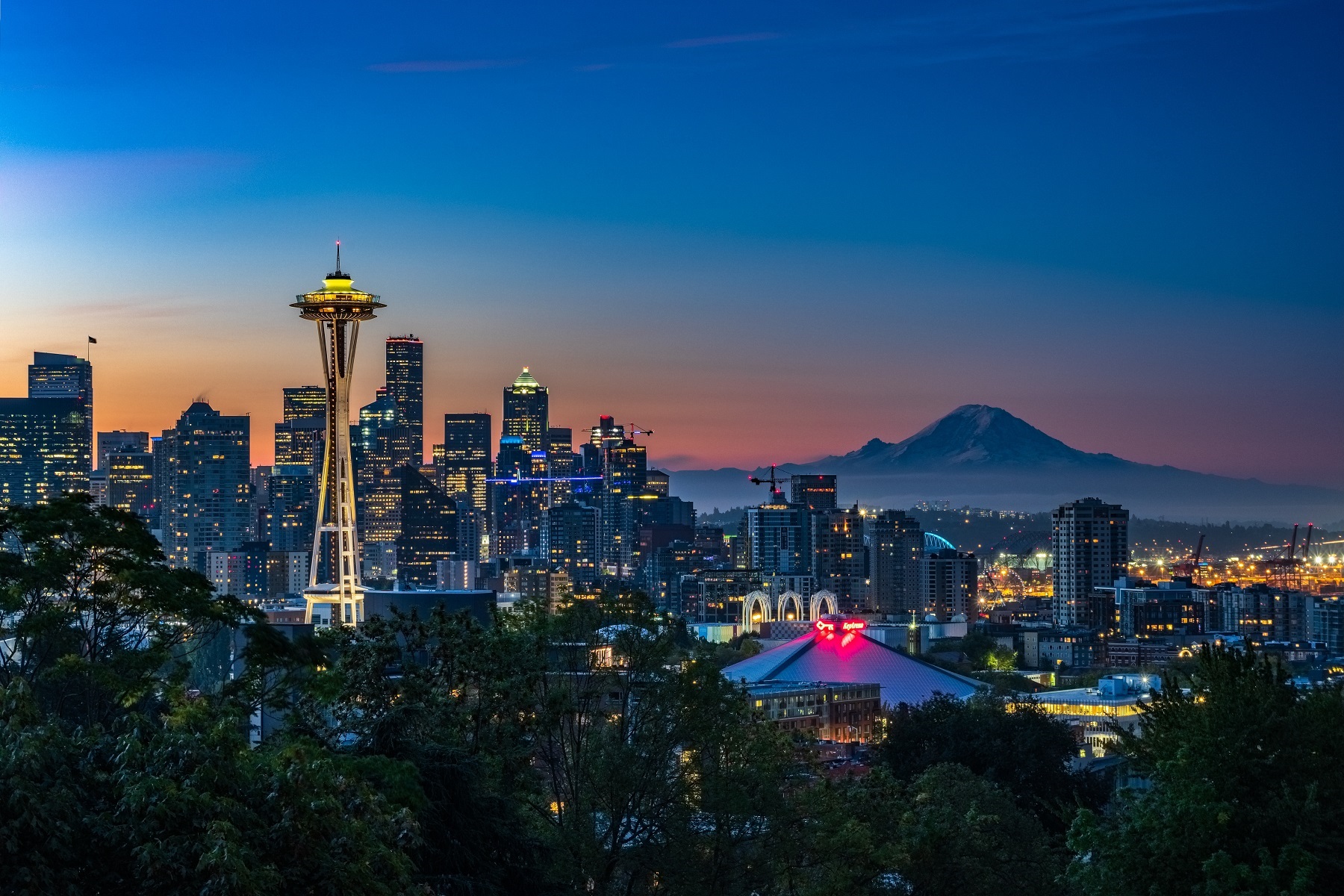
Seattle is an American metropolis in the northwestern corner of the United States and one of the technological centers in the country. At the same time the city has been particularly significant for recent American music. Of course, there are many sights as well, and the fact that the city is surrounded by magnificent scenery is something that just adds extra perspectives on a trip to here.

Seattle’s history is intriguing, for example, it has been the transit site for the gold diggers on their way to Canadian Klondike, which you can get acquainted with at one of the city’s museums. Seattle burned down in 1889, creating a new start for the city after the fire by raising the street level. You can see Seattle from before 1889 in the underground today. Later on, Seattle hosted the World Exhibition in 1962, and it also left its mark on the city’s skyline.

Read more about Seattle


Portland, Oregon, USA

Portland

Portland is the largest city in the US state of Oregon. The town’s history began with the many settlers who arrived at the Willamette Valley area in the 1840s. The town of The Clearing grew between Oregon City and Fort Vancouver. In the following years, Asa Lovejoy and Francis W. Pettygrove acquired the land around the town, and they changed the name to Portland after tossing a coin for the name.

After this, development proceeded quickly in the well-located city. In 1851, the town had a population of more than 800, growing to over 46,000 in 1890 and nearly 300,000 in 1920. In 1905, Portland hosted the Lewis and Clark Centennial Exposition, which attracted 1.6 million visitors. During the Second World War, a new period of growth started, when Portland and the neighboring city of Vancouver became home to the production of not least the so-called Liberty Ships.
Read more about Portland


Butte

Butte in the state of Montana is a city nestled in the heart of the Rocky Mountains. Butte began as a humble mining camp in the 1860s. The discovery of silver and gold initially drew prospectors to the area, but it was the vast deposits of copper that truly transformed Butte into a boomtown and industrial center.

By the late 19th century, the city had earned the nickname The Richest Hill on Earth due to its prolific copper production, which played a crucial role in the electrification of the United States.

Read more about Butte


Montana State Capitol, Helena, Montana, United States, USA

Helena

Helena is the capital city of Montana, and it is a city with an interesting history starting as a gold camp during the Montana gold rush. Helena was founded on October 30, 1864, and the discovery of gold at Last Chance Gulch attracted thousands of miners. The gold and all the prospectors transformed the area into a boomtown of its day almost overnight. The gold made Helena one of the wealthiest cities in the United States within decades, and several settlers made a fortune. This wealth is still reflected in the city’s elaborate Victorian architecture, which continues to captivate visitors today.

Development continued, and in 1889, railroad magnate Charles Arthur Broadwater opened his Hotel Broadwater and Natatorium west of Helena. The Natatorium was home to the world’s first indoor swimming pool. Helena was appointed the capital of Montana Territory in 1875, and in 1889 in the state of Montana. Referendums were held in 1892 and 1894 to determine the capital. Helena won and was then the most populous city in Montana. Butte surpassed Helena in 1900, but Helena maintained capital status, and the Montana State Capitol was completed in 1902.

Read more about Helena


Boise, Idaho, USA

Boise

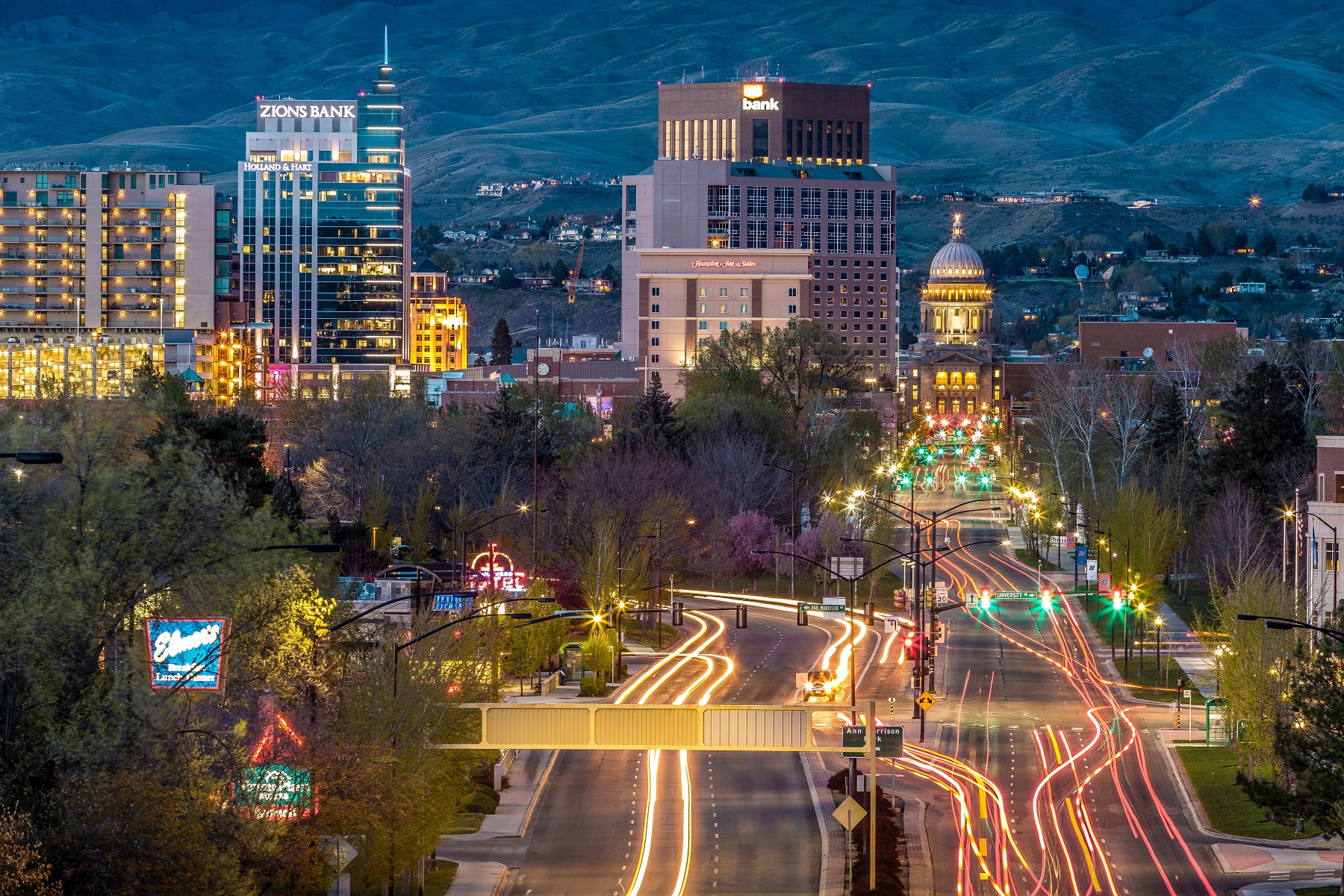
Boise is the capital of the US state of Idaho. The city’s history goes back to Fort Boise, which was established as a trading post by the British Hudson’s Bay Company. However, it was not located near today’s Boise, but the American Fort Boise di, which was built as a military outpost in 1863. That was the year of the establishment of the Idaho Territory, and the area attracted settlers due not least to the discovery of gold in the Boise Valley.

Boise became the capital of the territory, which became a state in 1890. The city grew rapidly, with construction on both sides of the Boise River. In 1891, the first line of a major streetcar network opened, and in 1925, Boise joined the transcontinental railroad network. Since then, the city has grown to be one of the largest urban areas in the Northwestern United States.

Read more about Boise

Geolocation

In short

Spokane, Washington Spokane, Washington[/caption]

Overview of Spokane

Spokane is the largest city in eastern Washington State, and the metropolitan area around Spokane has about 600,000 residents. The town’s history dates back to 1810, when David Thompson explored the area and established the House for the North West Company. Spokane House was a fur trading post, and it ensured a long-lasting presence that, after the completion of the Northern Pacific Railway in 1881, developed into the city of Spokane Falls, later simply called Spokane.

Today, you can see and visit several sights in Spokane. The River runs through the center of the city, and in the middle is Riverfront Park around the waterfalls that can be seen on this part of the river. The falls are some of the largest that can be seen in the heart of an American city, and you have a good view of them from the bridges over the River.

Riverfront Park was previously laid out as railroad yard and the area was home to Expo’74 before the present park opened in 1978. Highlights include the 1974 American Pavilion, the railroad-era Great Northern Clock Tower, and hydroelectric plants.

Downtown Spokane is a modern city center with many sights, activities, restaurants and shops. There are quite a few interesting buildings to notice. These include The Davenport Hotel from 1914 with an impressive lobby and the Bing Crosby theater from 1914 and the Fox from 1931. The Fox was built in Art Deco and is a sumptuous example of this style.

About the Spokane travel guide

Contents: Tours in the city + tours in the surrounding area
Published: Released soon
Author: Stig Albeck
Publisher: Vamados.com
Language: English

About the travel guide

The Spokane travel guide gives you an overview of the sights and activities of the American city. Read about top sights and other sights, and get a tour guide with tour suggestions and detailed descriptions of all the city’s most important churches, monuments, mansions, museums, etc.

Spokane is waiting for you, and at vamados.com you can also find cheap flights and great deals on hotels for your trip. You just select your travel dates and then you get flight and accommodation suggestions in and around the city.

Read more about Spokane and the United States

United States Travel Guide: https://vamados.com/usa
City tourism: https://visitspo-kane.com
Main Page: https://www.vamados.com/

Buy the travel guide

Click the “Add to Cart” button to purchase the travel guide. After that you will come to the payment, where you enter the purchase and payment information. Upon payment of the travel guide, you will immediately receive a receipt with a link to download your purchase. You can download the travel guide immediately or use the download link in the email later.

Use the travel guide

When you buy the travel guide to Spokane you get the book online so you can have it on your phone, tablet or computer – and of course you can choose to print it. Use the maps and tour suggestions and you will have a good and content-rich journey.


Travel Expert

Stig Albeck

Gallery

Gallery

Other Interesting Guides

Similar to Spokane Travel Guide