
Charleroi is a city in the Walloon part of Belgium. It is a city that arose after the Peace of the Pyrenees, which in 1659 ended the Franco-Spanish war that had lasted since 1635. With the peace, Spanish fortresses fell to France, and therefore in 1666 Spain founded a fortress at the village of Charnoy. The city was renamed and named after King Carlos II, which in French became Charleroi.
The following year, a new war started, and the city became French during a period when Vauban completed the fortifications. Charleroi changed hands countless times before the city became part of the Netherlands in 1814 and the new Belgium in 1830. Charleroi was industrialized and its city walls were torn down in 1871 to make way for new development.
Today, Charleroi is one of Belgium’s largest cities, and there are several sights that can be seen on a stroll through the city. The center of Charleroi is made up of Place Charles II, where you can see some of the city’s most famous architectural works. Here is the town hall, a building in an eclectic style that mixes classicism and art deco.
The town hall was inaugurated in 1936 and replaced the previous town hall on the same site. You can also see the town hall tower, which is one of the bell towers in Belgium and France that is included in the UNESCO World Heritage List. The clock tower is 70 meters high and clearly inspired by the art deco of the time.
Opposite the town hall is the Église Saint-Christophe, Charleroi’s main church. The history of the church goes back to 1667, when the French built a garrison chapel. Only the foundation stone survives from this chapel and it was inserted into the porch of the present church. Later, the Église Saint-Christophe was expanded in not least baroque style, until the last major change in 1956.
Therefore, the impressive church stands in a mixed architectural style, one of the highlights being Jean Ransy’s impressive mosaic in the choir. Close to the church, you can see the fine art nouveau house, Maison Dorée, which was designed by the architect Alfred Frère and built in 1899. You can notice some fine examples of sgraffito on the house’s beautiful facade.
South of Place Charles II is Place Verte, another of Charleroi’s large central urban squares. Place Verte is located in the middle of the city’s business district with many shops and narrow streets, and from here it is not far from the river Sambre, where you can walk along the promenades Quai Paul Verlaine and Quai Arthur Rimbaud.
In the city, you can also visit several museums, such as the Musée des Beaux-Arts, which is housed in a historic barracks building from 1887. At the museum, you can e.g. see Belgian art from the 1800s-1900s. Next to the museum you can see one of Charleroi’s most distinctive modern buildings, the Tour Bleue, which was designed by Jean Nouvel and opened as police headquarters in 2015.
Place Vauban is a square that forms the heart of Charleroi’s Ville-Haute district, and it bears a very clear symbolism from the city’s fortified past. The square was originally laid out as the Plaz d’Armes square of the Spanish fortress, established in 1666 under Carlos II of Spain. The characteristic hexagonal shape is directly an archetypal Renaissance plan, designed to optimize movement between bastions, and several streets emanate from the square, corresponding to the original bastion lines.
During the 20th century, the square underwent several transformations. In 1912, it was named after Carlos II, but in 2023 it was officially renamed Place Vauban as part of a city council decision referring to the famous military engineer Vauban. The name change reflected the desire to highlight the architectural planning of the past as an asset in today’s urban space. At the same time, in the 1990s, a parking area that filled the middle of the square was removed in favor of a water basin and fountain, which now gives the square a purely visual and recreational character.
Around the square are some of Charleroi’s most important buildings. Here you can see the town hall Hôtel de Ville, the belfry and the church Église Saint-Christophe. These buildings outline the square and contribute to its stately character. The town hall and the belfry stand as symbols of municipal power, while the church marks the religious and ceremonial space. Today, Place Vauban is an active urban space that, with its many radial streets, invites you to stroll through the center of Charleroi to shops, cafes, museums and other attractions.
Hôtel de Ville is Charleroi’s town hall. It was built between 1936 and 1938 as a central part of the city’s modernization in the interwar period. The architects Joseph André and Jules César used a combination of classicist proportions and period materials such as concrete and natural stone to create a monumental administrative building for the city government. The interior of the building contains offices, council chambers and a large staircase, where sculptural decoration and wall panels document political and industrial motifs associated with Charleroi.
The Beffroi de Charleroi, which forms the tower of the town hall, is integrated into the structure of the building and was built as one of the last bell towers in Wallonia. The tower is 70 meters high and was originally equipped with a carillon, which was used for ceremonial occasions and official celebrations of the city. The tower was built in the same materials as the town hall and demonstrates how the historical belfry tradition from the Middle Ages was continued in a modern context.
The Hôtel de Ville and its associated bell tower today stand as one of the most striking building complexes in Charleroi, and the tower is included on the UNESCO list of similar towers from different periods in various cities in Belgium and France.
Église Saint-Christophe is a church that dominates Place Vauban. It has deep roots in Charleroi’s military and religious history, as the building began as a garrison chapel in 1667 and was built under French rule in honor of Saint Louis. The chapel was intended for soldiers and garrison personnel, but it was later expanded and renamed in the early 18th century to serve the civilian parish life and dedicated to Saint Christophe. The original chapel structure has largely not been preserved except for a foundation stone, which is embedded in the current church.
The current building is partly Baroque and partly Modernist. In the 1950s, the church was rebuilt by architects Joseph André, Robert Puttemans and Charles Malcause, who, among other things, changed the original orientation. A dome with a diameter of about 16 meters was also added, rising a full 48 meters. The new main entrance was moved to Rue Vauban, which changed the spatial dynamics of the church and its relationship to the square. The transformation in the 1950s made the religious house considerably larger and more monumental than it had been before.
Inside, the Église Saint-Christophe houses a large mosaic created from designs by Jean Ransy and executed by Venetian masters from the Orsoni workshop. The mosaic covers over 200 m² and depicts the Revelation of John (the Apocalypse) with millions of small colored glass pieces, some of which are covered with gold foil. The spiritual and visual force field of the mosaic is a central element of the church’s contemporary identity and attracts many visitors precisely because of its artistic character.
The Musée des Beaux-Arts in Charleroi, also known as MBArts, has a history that dates back to an artistic ambition from the early 20th century. It was an idea to create a public art collection for the city, and it was promoted by the politician and cultural activist Jules Destrée. Destrée wanted Charleroi to be a center not only for industry, but also for culture, and he was instrumental in establishing an art collection that could represent the city’s cultural ambitions. The collection started small, but grew in size and quality over time through donations, purchases and institutional initiatives.
For many years, the museum was housed in Charleroi’s town hall. There, the museum was located on the second floor, and the works in the collection were available by prior arrangement. During the 1980s, the museum was opened permanently to the public, but the existing premises eventually became too small and unsuitable for contemporary demands for the conservation and exhibition of art. In 2022, the museum reopened in a completely new and restored building complex, originally stables at the Defeld barracks, dating from 1887. The building is located next to the iconic Tour Bleue, which is Charleroi’s modern police headquarters, which was officially inaugurated in 2014.
The museum’s collection covers a wide spectrum of art historical periods and movements from neoclassicism, realism and post-impressionism to surrealism, abstraction and contemporary art. The museum has significant works by artists associated with the region such as François-Joseph Navez, Pierre Paulus, René Magritte and Constantin Meunier, but also shows works by female artists, which the museum actively highlights as part of its mission to make art inclusive and representative.
BPS22 is a museum located in a former industrial pavilion from the early 1900s, originally built as an exhibition hall for technical and industrial presentations. The large hall structure with steel girders and high windows was converted into a modern art museum in the 2000s, where the industrial building-adapted architecture forms the framework for exhibitions of contemporary art with a focus on regional and social themes.
The museum’s exhibition profile includes installations, paintings, video, sound and other works. Particular emphasis is placed on art related to industry, work culture and urban development in the Hainaut province. The large hall makes it possible to present works on a monumental scale, which require both high ceilings and flexible exhibition systems. The industrial glass facade provides natural light, which is controlled via technical solutions built into the pavilion’s structure.
The Musée de la Photographie is located in the former buildings of the Carmelite monastery in Mont-sur-Marchienne, where the 19th-century monastic structure forms the framework for one of Europe’s largest museums of photography. The original monastery wings were converted into a museum in the late 1970s, undergoing extensive renovations to integrate exhibition halls, storage and conservation facilities without removing the building’s historical identity.
The museum’s collections span the development of photography from 19th-century daguerreotypes to modern digital productions. Archives, equipment and photohistorical objects document both technical changes, such as new optical principles, film types and reproduction techniques, and the socio-cultural frameworks surrounding photography. The collection is constantly growing through donations, acquisitions and collaborations with institutions in Belgium and abroad.
A major expansion in the early 2000s added a modern pavilion, designed as a contrasting piece to the monastic architecture. The building was constructed in glass and concrete to create large, neutral exhibition spaces where controlled lighting is essential. The modern addition allows for the presentation of large thematic exhibitions, including documentary photography, press photography and conceptual works.
Located south of the centre of Charleroi, Le Bois du Cazier was for decades one of the region’s most important coal mines. The development of the site accelerated in the late 19th century, when the coal industry in the Sambre–Meuse belt experienced significant growth. The mining area was equipped with tipper tracks, laundries, workshop buildings and two characteristic main shafts, which still stand as central elements of the preserved industrial complex. The site is closely linked to the development of Charleroi as an industrial city and illustrates the close link between mining, rail transport and local labour during the period.
On 8 August 1956, one of Europe’s worst mining disasters occurred when a fire broke out in shaft no. 1, spreading smoke through the deep mine passages. 262 miners died, many of them foreign workers from Italy in particular, and the disaster led to fundamental changes in occupational safety, ventilation technology and mining regulation in Belgium. This event was a turning point in the country’s industrial history, and Le Bois du Cazier was later preserved as a place of both remembrance and documentation of the risks and complexities of the coal industry.
The site now houses an extensive museum, where the original workshop buildings and welfare facilities have been preserved in their industrial context. The exhibitions document both technical aspects of mining, the socio-economic conditions of the working class and the role of migrants in the industry. The restored workshops contain machines, tools and archives that make it possible to follow the entire production chain from coal extraction to processing.
The area around the shafts and slag heaps is organized as a large cultural-historical open-air area, where visitors can follow marked routes between building remains, installation areas and viewpoints. The two steel shaft towers stand as reference points in the landscape and mark the industrial identity that characterized Charleroi throughout much of the 20th century.

Brussels is home to the European Parliament, for many, one of the symbols of the European Union, but the Belgian capital has so much else to offer from its long Flemish history. The city center is Grote Markt / Grand Place, which is considered one of the most beautiful squares in the world.
Only a few minutes walk from Grote Markt, you can see the figure Manneken Pis, the boy who continues to pee after many centuries. And in the old town center there are numerous sights in an easy walking distance from one place to another. Manneken Pis is by the way seen seasonally with different clothes and he always draws many tourists.
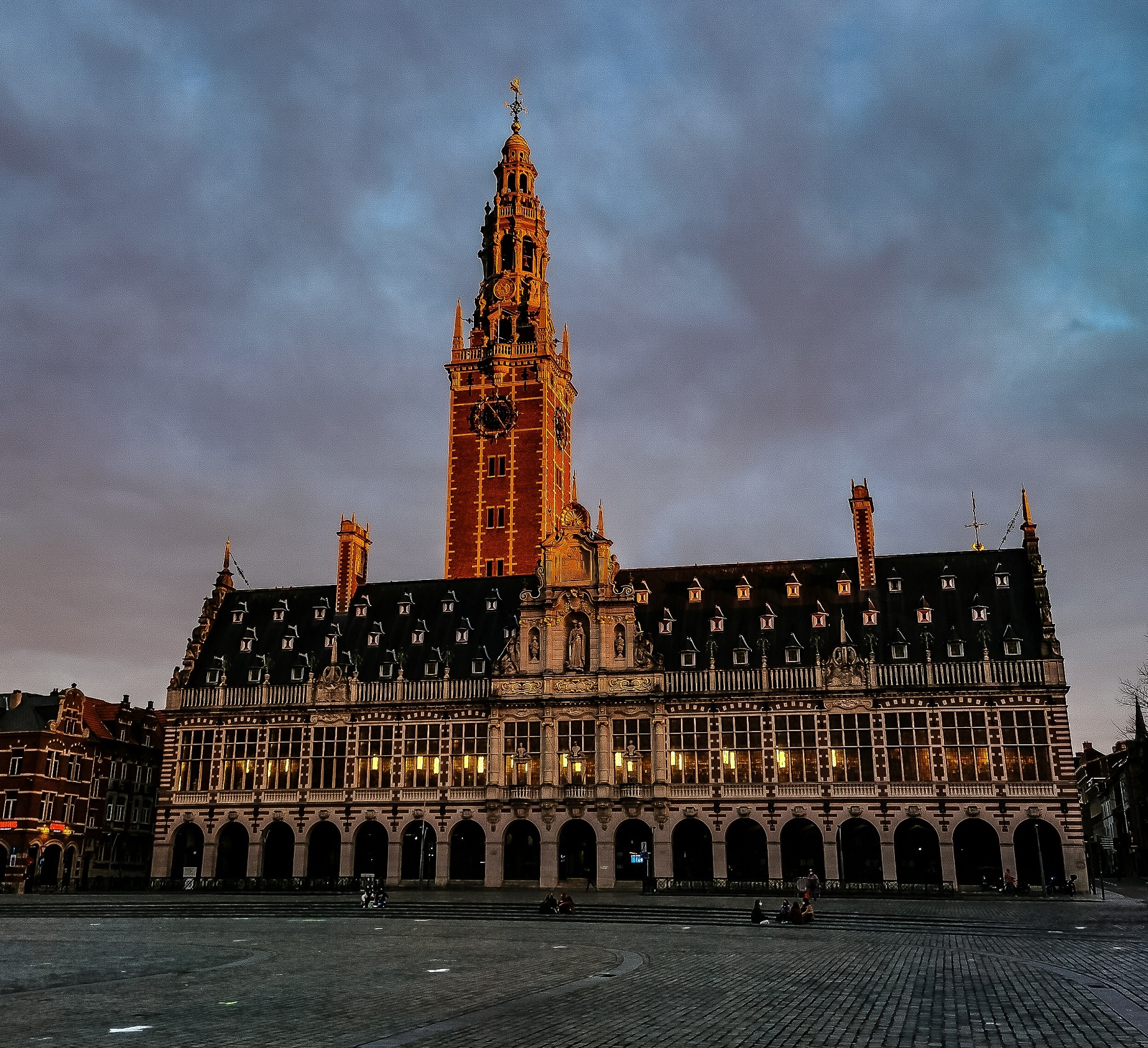
Leuven is one of the well-known Flemish cultural cities in Belgium. The city is known to be mentioned for the first time in 891 in connection with the Battle of Leuven. Over the following centuries, the city developed into one of the most important trading cities in the Duchy of Brabrant, which was a state in the Holy Roman Empire.
There was also a large textile production in the 1400s and 1500s, and the 15th century became a golden age for the city with the foundation of the university in 1425 and the construction of large buildings such as Leuven’s town hall. The city continued as a center of knowledge, and Erasmus and Gemma Frisius worked here. Throughout the 1700s and 1800s, Leuven was rapidly developed, and the industry developed with Den Horn brewery and others.

Charleroi, Belgium
Overview of Charleroi
Charleroi is a city in the Walloon part of Belgium. It is a city that arose after the Peace of the Pyrenees, which in 1659 ended the Franco-Spanish war that had lasted since 1635. With the peace, Spanish fortresses fell to France, and therefore in 1666 Spain founded a fortress at the village of Charnoy. The city was renamed and named after King Carlos II, which in French became Charleroi.
The following year, a new war started, and the city became French during a period when Vauban completed the fortifications. Charleroi changed hands countless times before the city became part of the Netherlands in 1814 and the new Belgium in 1830. Charleroi was industrialized and its city walls were torn down in 1871 to make way for new development.
Today, Charleroi is one of Belgium’s largest cities, and there are several sights that can be seen on a stroll through the city. The center of Charleroi is made up of Place Charles II, where you can see some of the city’s most famous architectural works. Here is the town hall, a building in an eclectic style that mixes classicism and art deco.
About the Charleroi travel guide
Contents: Tours in the city + tours in the surrounding area
Published: Released soon
Author: Stig Albeck
Publisher: Vamados.com
Language: English
About the travel guide
The Charleroi travel guide gives you an overview of the sights and activities of the Belgian city. Read about top sights and other sights, and get a tour guide with tour suggestions and detailed descriptions of all the city’s most important churches, monuments, mansions, museums, etc.
Charleroi is waiting for you, and at vamados.com you can also find cheap flights and great deals on hotels for your trip. You just select your travel dates and then you get flight and accommodation suggestions in and around the city.
Read more about Charleroi and Belgium
Belgium Travel Guide: https://vamados.com/belgium
City tourism: https://visitcharle-roi.be
Main Page: https://www.vamados.com/
Buy the travel guide
Click the “Add to Cart” button to purchase the travel guide. After that you will come to the payment, where you enter the purchase and payment information. Upon payment of the travel guide, you will immediately receive a receipt with a link to download your purchase. You can download the travel guide immediately or use the download link in the email later.
Use the travel guide
When you buy the travel guide to Charleroi you get the book online so you can have it on your phone, tablet or computer – and of course you can choose to print it. Use the maps and tour suggestions and you will have a good and content-rich journey.
Similar to Charleroi Travel Guide