Loading

Stavanger

58.96998, 5.73311

Stavanger Travel Guide

Travel Author

Stig Albeck

City Map

City Introduction

Stavanger is located on the coast in southwestern Norway, and it is one of the country’s largest cities. Stavanger’s history goes back to the Viking Age, where the city developed through the 12th and 13th centuries to be a place for holding markets and an ecclesiastical center as well. Stavanger obtained market town rights in 1125 and on this site the city’s cathedral was also completed as the main church of the new bishop’s seat. Growth continued in the following centuries until the Reformation, when Stavanger’s ecclesiastical importance declined. In the following centuries, the episcopal seat was even moved to newly established Kristiansand.

Stavanger flourished again in the 19th century due to a rich herring fishery alongside the traditional seafaring industry that always was important for the city. The population also increased significantly, which has continued to this day, when Stavanger has flourished significantly since the latter half of the 20th century due to the extraction of oil in the North Sea.

Today, Stavanger is a lovely city with several attractions and beautiful nature. You can start the visit at the square named Domkirkeplassen. Here you can see Stavanger Cathedral, which was built in the first half of the 12th century, and the church is thus the oldest preserved cathedral in Norway. The city became the episcopal seat around the year 1125, and except for a few years in connection with the Reformation, the church had that status until 1682. Since 1925, Stavanger Cathedral has again been the episcopal seat, and it is today dedicated to Saint Svithun.

The cathedral has a Romanesque nave, and a Gothic choir. Inside, you can e.g. see the pulpit from 1658 and a baptismal font from around 1300. The church also houses Anders Lauritzen Smith’s Bible from 1589. Next to the cathedral is the house, which was built as a bishop’s residence in the Middle Ages, and from here you can take a walk in the Byparken, where you can walk around the lake Breiavatnet, and along the way there are several sculptures you can enjoy.

From the area by the cathedral, you can walk north to Stavanger’s harbor, which has been the focal point for the city’s development for centuries. At this location is Torvet, which throughout the city’s history has been Stavanger’s marketplace. At Torvet you can see a statue of the writer Alexander Kielland, and in the lower part facing the harbor stands the Maritime Monument, a work by Arnold Haukeland. From here, the inner harbor connects into Vågen, which is surrounded by the street Strandkaien to the west and Skagenkaien to the east.

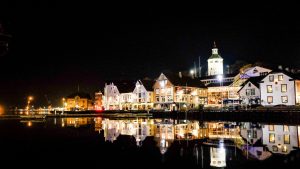
Close to the Maritime Monument is the Stavanger Maritime Museum, whose exhibition focuses on the maritime history of the Southwest of Norway. You can simply enjoy the atmosphere around Vågen as well with the area’s many wooden houses, cafes and restaurants. You can see the Valberg Tower, which is located above Skagenkaien. The tower was built 1850-1853 as a watchtower, from which you could keep an eye on not least fires in the city. There is an exhibition in the tower, and a good view of the area from the tower.

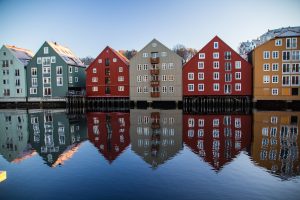
West of Vågen, you can walk through the streets Øvre Strandgate and its side streets, which form the Gamle Stavanger quarter. The neighborhood is characterized by the beautiful wooden houses that were built here mainly in the 1700s and 1800s. Most of the houses are painted white and give the impression of historic Stavanger, which in the middle of the 20th century was demolished elsewhere in the city. You can also find cozy streets east of Vågen in the center of Stavanger. Here you can walk along narrow streets such as Østervåg and Søregate, and you can take a walk along Kirkegata, which is slightly more recently built.

From here, it is not far to Nytorget and Sankt Petri Church, which was built 1864-1866 with a see-worthy interior. At the harbor in this quarter, you can visit the interesting Norwegian Oil Museum, which describes the history of the Norwegian oil exploration in the North Sea. The building was constructed with inspiration from drilling platforms, and the site shows an important part of modern Stavanger’s history. If you want to know more about other parts of the city’s cultural and natural history, you can visit the Stavanger Museum, which was opened in the current museum building in 1893.

Top Attractions

Market Square
Torvet

The Square is Stavanger’s central meeting place and an open and inviting square surrounded by culture, history and commerce. It is located as a natural transition between the modern city center and the historic cathedral, and the place has been used as a marketplace since the Middle Ages. Today, the Square is still a place of life and activity, where both locals and tourists settle down at the cafes or stop to enjoy the view of the cathedral’s impressive facade or over the water in Vågen, which forms the city’s inner harbor.

The square has undergone several major renovations to keep up with the city’s development. The latest modernization has given the Square a more open expression with space for outdoor dining, events and city life all year round. And the Square also serves as the stage for some of Stavanger’s biggest celebrations and events, from Christmas markets and May 17 celebrations to cultural festivals.

For visitors, the Square is also a natural orientation point. From here, you are only a few steps away from the Cathedral, the City Park, the shopping areas in the city center and the old harbor. From here you can also quickly visit some of the city’s interesting museums, so Torvet is, in short, the heart of Stavanger.


Vågen

Vågen is almost the name of Stavanger’s maritime identity. The harbor is surrounded by historic warehouses, colorful facades and modern buildings. There is thus an architectural mix that reflects the city’s dramatic journey from fishing village to energy metropolis and cruise destination, because this is also where the large ships dock with guests to the city.

Along the quay are restaurants, bars and cafés side by side. In the summer, the outdoor areas fill up, and the atmosphere becomes international and lively. The many visitors from cruises, among other things, contribute to the vibrant atmosphere. At the same time, you can see fishermen and small boats, which provide a glimpse of the more traditional harbor life.

Vågen has been the center of trade and business for centuries. From here, fish, clipfish and later canned products were sent out into the world. Today there is plenty of activity, and you can visit the Stavanger Maritime Museum and Stavanger Concert Hall along the water, and it is a short walk to major attractions such as the Norwegian Oil Museum and the Valberg Tower, from which you can enjoy a panoramic view of Vågen, among other things.


Stavanger Maritime Museum

The Stavanger Maritime Museum is located in some of the harbor’s older houses and tells the city’s history through the sea. The museum takes its starting point from Stavanger’s time as a fishing village and trading port. It is a story of both greatness and uncertainty, where the forces of nature and the sailing routes of sailing ships determined the city’s fate. The old warehouses form an authentic backdrop and are cultural heritage in themselves.

Inside the museum you will find a rich collection of maritime objects with sailing ship models, navigation instruments, sea charts and rebuilt workshops. There are also exhibitions about life on board for both captains and sailors, where you get up close to everything from food and uniforms to trade and images of threats such as pirates and storms. The story is told through real people and their everyday lives at sea. This makes the visit extra immersive.

The museum also tells about the national and international trade that made Stavanger wealthy. This was especially the case during the period of herring and clipfish, and the city’s position in the North Sea provided connections all the way to Europe and America, and many Stavanger families had their futures tied to the opportunities of the sea. For children and families, there are interactive stations where you can try loading ships, navigating by stars or examining old maritime crafts.


Stavanger Concert Hall
Stavanger Konserthus

Stavanger Concert Hall is beautifully located on the waterfront in the so-called Bjergsted Cultural Park, and it is one of Norway’s most modern and spectacular cultural centers. The building opened in 2012 and consists of two large concert halls, the Fartein Valen Hall and the Zetlitz Hall, and various rooms with, among other things, good vantage points with a panorama over the water. The architecture is bright, open and maritime-inspired with large glass facades that reflect the sea, and where ship motifs are repeated in the construction lines.

The Concert Hall is home to the Stavanger Symphony Orchestra, which is one of Norway’s leading orchestras with a strong international profile and a diverse classical program. The Fartein Valen Hall in particular is known for its world-class acoustics. The hall’s varying wooden panels and hidden sound absorbers make it possible to adapt the sound to everything from large symphonies to chamber music, and it is a place where the audience can feel both the power and finest nuances of the music.

The special thing about Stavanger Concert Hall is also its diversity. The Zetlitz Hall serves as a flexible stage for rhythmic concerts, theater performances, dance, stand-up, festivals and large-scale productions with advanced lighting and sound technology. Here, new art forms, local talents and international artists meet, and the program ranges from pop and rock to electronic music and large-scale shows.

You can also see the Kuppelhallen in the area. It is the oldest of the city’s large cultural arenas and is also located in Bjergsted Kulturpark, a few minutes’ walk from the new concert hall. The hall was built in 1982 and stands out with its characteristic domed shape. The building offers warm, round acoustics, which are particularly suitable for rhythmic music and large shows.


Old Stavanger
Gamle Stavanger

Old Stavanger is Stavanger’s best-preserved historic urban environment and one of Europe’s most extensive areas of continuous wooden house construction. The area was created in the late 18th and early 19th centuries, a time when the city was mainly made up of sailors, fishermen and craftsmen. The small, compact houses do not reflect great wealth, but the demand of the time for functional homes close to the harbor. Today they stand as a rare testament to the maritime-related life that defined Stavanger for centuries, before oil changed the city.

The houses are painted white, and this is not due to a fashion, but because white paint was once the cheapest and most practical. Windows with small bars, low entrances and steep roofs are typical features. The narrow cobblestone streets wind between the buildings, creating atmosphere and intimate urban spaces, and you can almost hear the old wooden doors creak and imagine women who once hung cod to dry outside.

The area was saved when major demolitions threatened in the mid-20th century. At that time, city planners wanted to build wider roads and modern concrete buildings. Fortunately, cultural preservationists stepped in and today Old Stavanger has a protected status. Many of the small houses function as private homes, and the residents themselves keep the facades in perfect condition, which means that the neighborhood is still alive and does not feel like a museum.

As a visitor to this charming neighborhood, you can explore small galleries and workshops with handmade art. You can also simply enjoy a walk through the streets or visit the Norwegian Canning Museum and the Norwegian Graphic Museum, both of which tell about Stavanger’s former main industry, which was the sardine canning factories. Sardine production was what established Stavanger’s graphic industry through a need for labels and packaging. You can also take a walk in the evening, when the light reflects off the white facades of the houses and in the water of the harbor. Then you can truly experience Old Stavanger as the city’s most beautiful and romantic neighborhood.


Valberg Tower
Valbergtårnet

Valberg Tower is a well-known tower located on Valberget, one of the highest points in the old city center of Stavanger. From here, there is a view of both Vågen and the city center. The tower was built in 1853 as the city’s fire tower, which served an essential function in a city where the danger of wooden house fires was always present. The city’s watchmen had their permanent post up here and monitored the rooftops for smoke and flames. The architect Christian Heinrich Grosch, who was one of Norway’s most prominent architects of his time, gave the tower a rustic, defensive appearance that still adorns the Stavanger skyline.

Inside, Valberg Tower consists of several floors with stairs leading to the viewing platform at the top. The stone walls are thick and solid, giving an impression of the security that was built into the tower’s former role. Today, the tower houses a small exhibition about the history of watchmen, where you can learn about the unique craftsmanship. The watchman made nightly rounds, shouting the hour and warning, and kept the city safe in a time without sirens and alarm centers.

The view from the top makes the visit something very special. Here you can look down over Old Stavanger, the harbor and the modern oil-related buildings on Skagenkaien. The contrasts between the wooden houses of the past and the energy metropolis of today become very clear from Valberget, and the place is therefore an obvious starting point for understanding Stavanger’s development over 200 years. Today, Valbergtårnet is also an atmospheric cultural site. Small events are regularly held, and the viewing platform is a favorite stop for both tourists and locals.


Norwegian Oil Museum
Norsk Oljemuseum

The Norwegian Oil Museum stands as a modern temple to Norway’s oil age. It was the upheaval that transformed the country from an economy based on fishing to one of the world’s most prosperous nations from the 1970s onwards through major oil and gas discoveries and subsequent extraction. The museum is located directly on Stavanger’s waterfront, and the industrial building is shaped like parts of an oil rig, creating a raw, functional aesthetic that reflects the reality of the offshore.

The exhibitions begin with geology, depicting how dead microorganisms were pressed into oil underground over millions of years. They then follow the development of technology and drilling in extremely deep water, which has always been a battle against the forces of nature. Authentic life jackets, platform models and large machine parts are tangible evidence of the technical skill and courage of offshore workers.

A large part of the museum also focuses on the people behind the adventure. Video interviews provide a personal insight into the fear, longing and pride of those who live and work for days far from land. You gain an understanding of a working life where community is a survival strategy and where mistakes can have catastrophic consequences. As an important contemporary dimension, the museum also presents the debate on climate, environment and energy transition. It illustrates both the price of wealth and the necessity of innovation towards more sustainable solutions.


Cathedral Square & City Park
Domkirkeplassen & Byparken

Domkirkeplassen is one of the city’s central squares, where Stavanger Cathedral stands as a historic and majestic focal point. The square has recently been developed with modern buildings that contrast with the old church. It still functions today as a natural center, where people pass by, meet and stop in front of the cathedral’s impressive facade to enjoy the square’s other offerings.

Right next to Domkirkeplassen is Byparken, one of the oldest city parks in Norway. It was built in the mid-19th century and spreads around the small lake, Breiavatnet, where swans and ducks live. From here, the cathedral is reflected in the water surface on windless days, and it is one of the most photographed motifs in the city. Green lawns, flower beds and old trees create a peaceful atmosphere in the middle of a busy city.

Over time, the park has been both a place for promenades and a meeting place for citizens. Benches and paths are placed so that you can enjoy views of the church, the lake and the buildings that surround the area. The city park also serves as a natural transition to large parts of the city center, and it is possible to experience large parts of Stavanger from here.


Stavanger Cathedral
Stavanger Domkirke

Stavanger Cathedral is Norway’s oldest cathedral in continuous use. Today, it is a living medieval church, where both regular services and national ceremonies take place. The church was built shortly after Stavanger became the episcopal seat around 1125, and its foundation is closely linked to the formation of the city itself. As Stavanger grew as a trading center, the cathedral became both a religious and political center in the region, and today the church can be seen in the city center.

The church’s architecture is a fascinating interplay between Romanesque and Gothic styles. The nave is massive with thick walls and round arches, which is typical of Romanesque architecture. The choir was rebuilt after a fire in 1272 and today has slender pointed arches and tall windows, which originate from the Gothic style. The windows let in a whitewashed, silky light over the altar, which is clearly visible when you enter the church.

Inside, you will find a deep and almost sacred silence, which is broken by the rich tones of the organ during concerts. The sumptuous pulpit was carved in wood by the sculptor Andrew Smith in 1658, and it tells Bible stories through intricate ornaments. The altarpiece from the 1660s stands as the church’s artistic highlight. It is a visual story of the life of Christ with dramatic scenes in wood and gilding. Every stone, every panel carries stories of changing times in the church from Catholic saint worship to Protestant simplicity.


St. Peter’s Church
Sankt Petri Kirke

St. Peter’s Church is located only a few minutes’ walk from the Cathedral, but represents a completely different time and architectural style. The church was built between 1864 and 1866 in a modified round-arched style that was fashionable at the time, imitating the Romanesque style from the Middle Ages. St. Peter’s Church was built as a parish church for the rapidly growing urban population during the industrial period. The former parish around the cathedral had been divided in two in 1860, and two years later the city council decided to build the new church for the newly created parish.

It was Conrad Fredrik von der Lippe who designed the church. Inside his work, the gaze is lifted upwards to the impressive construction of the ceiling, which is supported by beautiful supporting pillars, which create a devout setting for church services, enhanced by the filtering of the light through the stained glass windows into an atmosphere of tranquility. The pulpit is decorated with detailed wood carvings, while the altarpiece is made up of Bertel Thorvaldsen’s famous statue of Christ. The statue is a copy of the original that the sculptor created for the Church of Our Lady in Copenhagen.


Ledaal

Ledaal is a magnificent manor house and at the same time a symbol of the heyday of Stavanger’s bourgeoisie. It was built between 1799 and 1803 as a representative residence for the merchant Gabriel Schanche Kielland, who was one of the region’s most influential men. The building made it possible to receive nobles, officials and prominent travelers with splendor and elegance, and it became the center of culture and social life in Stavanger.

Inside, the rooms are characterized by Empire style with tall mirrors, elegant salons, golden details and furniture in mahogany and silk. Ledaal’s interior today stands almost like a timeless tableau. It is as if the hosts can enter the rooms at any moment. Tours are conducted through original stories about the house’s residents, exciting social stories and information about the city’s European connections in trade and taste.

Ledaal also functions as Stavanger’s royal residence. This means that the Norwegian royal family can stay here during official visits to the region. This feature underlines the site’s continued status as a prestigious address and representative residence even more than 200 years after its construction. The surrounding gardens feature old fruit trees, symmetrically laid out walkways and green spaces, which are perfect for quiet breaks in the summer.


Breidablikk

Breidablikk is an elegant and detailed villa from the 1880s, which was built for consul and shipowner Lars Berentsen. The house represents the lifestyle of the upper class at a time when Stavanger’s wealth was built on sailing ship shipping and international trade. The name Breidablikk comes from Norse mythology. According to the sagas, the god Balder lived in a magnificent residence of the same name, and this says everything about the ambitions behind the building.

Architecturally, Breidablikk is a fantastic example of historicism, a style that mixes references to previous eras. The facade features ornate gables, pointed roofs and ornate details, which give the house a fairytale character. Inside, you immediately sense that this was a home for those with money and taste. Here, there are deep colors, carved panels, oriental carpets and furnishings like in a period museum. The only difference is that everything is original and fully preserved.

The museum offers guided tours where you can hear about both the people and the fashion trends behind the villa. Each room tells its own story. The library was the setting for intellectual interests, the dining room for social rituals and the living room for family gatherings and self-expression. The kitchen and servants’ areas help to provide a rare insight into the hierarchy that existed in the home of the time.

The garden around Breidablikk contains old trees and is a beautiful structure that completes the visit. In combination with the nearby Ledaal manor, Breidablikk forms a cultural axis in Stavanger, where you can dive directly into the city’s finer history. It is one of those places where time stands still and where the splendor of the past can be experienced up close.


Mosvatnet & Stavanger Art Museum
Mosvatnet & Stavanger Kunstmuseum

Mosvatnet is one of Stavanger’s most popular natural oases. It is a large lake surrounded by a city park with idyllic paths, old trees and abundant birdlife. The lake was created as a drinking water reservoir in the 19th century, but is today a recreational area for exercise, relaxation and nature experiences. There is a approximately 3-kilometer-long hiking trail that is perfect for walks and runs, and the areas around the lake are frequently used by both families and nature photographers.

On the shores of the lake is the Stavanger Art Museum, one of Norway’s most important art museums. The collection ranges from historical works to modern contemporary art, and the museum is particularly known for its unique collection of paintings by the artist Lars Hertervig, who was one of Norway’s most important landscape painters. His works from the 19th century depict nature in dramatic and dreamlike colors, and many have motifs from Stavanger and the surrounding area. The museum also offers varying special exhibitions of international art as well as events that bring the art experience to life.


Ullandhaug Tower
Ullandhaugstårnet

The Ullandhaug Tower stands at the highest point in the city and is a communications tower that also serves as one of Stavanger’s most impressive viewpoints. The tower was built in the 1960s as a radio and TV tower, and at 64 meters, it towers significantly over the city. Together with the mountain peak, the viewpoint reaches approximately 200 meters above sea level, providing a panoramic view of both water, fjords, the archipelago and large parts of Stavanger.

The viewing platform invites you to a 360-degree experience of the region’s geography. You can see the opening of the Lysefjord to the east, Hafrsfjord and the flat landscape of Jæren to the west, as well as the entire city of Stavanger, which spreads out at different altitudes. On clear days, you can even glimpse the Ryfylke mountains in the distance. The tower itself is not open on the inside in the same way as a traditional observation tower, but the platforms and the area around it are fully accessible.


Iron Age Farm
Jernaldergården

The Iron Age Farm at Ullandhaug is a unique cultural-historical site where you can step directly into life as it was lived in the Iron Age around 1,500 years ago. Finds from the area have made it possible to recreate buildings and a village structure exactly where Iron Age people actually lived. The landscape around the farm is open and wind-blown, and you can sense life as it might have been back then.

The reconstructed longhouses were built with earth walls, grass roofs and a central hearth, which was the home’s warmth and light. Here you can see how family life was organized. The animals were in one part of the house, people in the other, and material resources were carefully protected from the cold of winter. The interior clearly shows the difference between rich and poor and between everyday wear and tear and rituals.

The museum’s presentation makes the past present. During the summer period, there are often actors performing crafts such as blacksmithing, weaving or cooking over an open fire. You can sit by the fireplace and hear stories of trade, lineage and battle, and suddenly the Iron Age does not feel distant, but like a living chapter in the region’s history.


Sword in the Mountain
Sverd i fjell

Sword in the Mountain is one of Norway’s strongest national symbols. The monument was created by sculptor Fritz Røed and inaugurated by King Olav V in 1983 to commemorate the Battle of Hafrsfjord in 872. It was the event where Harald Fairhair united the Norwegian petty kings under one crown. With 10-meter-high swords, cast in bronze and planted in the mountain, as if the war had just ended, history takes on a dramatic and physical presence.

Each sword represents a power factor. The largest symbolizes the king’s power, while the two smaller ones represent the defeated earls. The sword blades are firmly fixed and cannot be drawn again, which is a strong symbol of peace and national unity. The monument balances between saga and contemporary times, where the ancient battle is depicted in a modern, monumental artistic expression.

The location on the banks of Hafrsfjord was carefully chosen. The water reflects the swords and is reminiscent of Viking ships that once sailed here. The landscape is open and calm, inviting reflection on history, identity and the consequences of war. Many visit the site at sunset, when the bronze surfaces glow in warm tones. Today, Sverd i fjell is not only an attraction in southwest Stavanger, but also a national gathering point. Historical events are held here, and school classes have their first major encounter with the Viking Age. It is also a place where countless tourists seek a powerful photographic experience.

Other Attractions

Day Trips

Sola

Sola is located southwest of Stavanger and is known as one of Norway’s absolute best beach municipalities. It is a place where nature is both raw, mild and dramatic at the same time. Along the coast of Jæren you will find the wide and golden sandy beaches of Sola, Hellestø, Ølberg and Byberg, which in summer are filled with happy families, surfers and kitesurfers. In winter, it is the waves and the wind that take the stage, and many locals go out here simply to feel the power of the North Sea. The light is constantly changing, and this gives the beach a special atmosphere that has also attracted artists for decades.

Few Norwegian coastal areas bear such clear traces of World War II as Sola. During the war, Sola Air Station was a strategically important German air base, and many bunkers, gun emplacements and trenches can still be seen in the terrain around the beaches. At the Sola Aviation History Museum you can get up close to old fighter planes, transport aircraft and historical stories about aviation and local history; including the invasion of 1940.

Another important historical site is the Sola Ruinkirke, a medieval church from the 12th century. It is not a ruin, as the name might suggest, but it was close to disappearing completely. Fortunately, it was instead carefully restored and today stands as a strong symbol of the region’s long history of settlement.

For those seeking well-being, the Sola Strand Hotel is an almost iconic place. The hotel has been welcoming travelers since the beginning of the 20th century and has a spa, art collections, a beach restaurant and easy access to the beach and other attractions in the area.


Bryne

Bryne is located in the middle of the open landscape of Jæren, where the horizon seems endless, and where agriculture has shaped both nature and people. Agriculture in Jæren is among the most productive and modern in all of Norway. The flat and fertile plain landscape, which is rare in an otherwise mountainous country, together with a mild coastal climate, makes the area ideal for livestock farming and dairy production. Large green fields, cattle, sheep and advanced agricultural machinery dominate the view, and many of the raw materials for Norwegian daily goods come from here; not least milk, cheese, beef and vegetables.

When you arrive in Bryne, the city center is both manageable and cozy with shops, coffee shops and green pockets where you can enjoy the surroundings. Bryne has given Norway some of its important cultural figures. The most famous is the author Arne Garborg, who in his novels and texts tried to capture the special nature of the area’s identity and nature. His childhood home nearby, Knudaheio, can be visited and is located with one of the most beautiful views of Jæren’s fields and skyline.

Another cultural center is Bryne Mølle, which is a restored milk factory and mill building, which now functions as a gallery and gathering place for the city’s cultural life. Concert evenings, market days and art exhibitions are held here. The artist Fritz Røed, the man behind the Stavanger monument Sword in the Mountain, also grew up in Bryne. His sculptures can be seen in several places in the town and connect Jæren with the larger art history in Norway.


Egersund

Egersund is one of the southwestern coastal towns that has preserved its old wooden house environment the best. The city center consists of narrow streets and small houses in fresh colors, giving an almost southern European look. History is felt in every corner. Fishing and trade have been the foundation here for generations, and many of the old warehouses by the harbor are now used for restaurants and cultural life.

The city has one of Norway’s largest and most beautiful wooden churches, Egersund Church, which offers baroque details and a warm, bright interior that reflects the rich civic culture that flourished in the 18th and 19th centuries. Egersund Ceramics Factory was once one of the most important workplaces in the town, and its history can be experienced in local exhibitions, which are cultural heritage that gives the town its identity.

The nature of the place is in a class of its own. Only a short drive away is Eigerøy Lighthouse, dramatically situated on a rocky coast, where water and wind meet in an eternal drama. Here you get both fresh air and one of Norway’s most beautiful lighthouse motifs on camera.


Haugesund

Haugesund is a city with strong historical roots and a beautiful location on the Smedasundet, where until recently boats sailed close through the city center every single day. The harbor area is still the city’s large living space with cafes, restaurants, maritime history and an atmosphere that is both urban and maritimely relaxed. Here you can take some lovely walks along the harbor promenades, and you can also walk into the city streets, where the majestic Vår Frelsers Kirke marks Haugesund’s religious center.

Haugesund’s city center contains a number of exciting museums and cultural venues, where the city’s maritime heritage, art life and historical identity are explored and communicated. Along the harbor promenade on Hasseløy is Dokken Museum, which exhibits in an exciting way how people lived from 1850 onwards in the city. It was a time when herring fishing provided work, and Dokken Museum shows many aspects of city life. You can also visit Haugesund Picture Gallery and see Norwegian and international art with a special focus on Western Norway. In the midst of cultural life, you will also find Festivitene, the city’s theater and concert hall. Festivitene is located on the city’s town hall square, where you can also see Haugesund’s neoclassical town hall from 1931.

However, the Viking history is what gives the city its unique identity. At Avaldsnes, just a 10-minute drive from the city, Harald Fairhair is believed to have had his royal estate, and it is here that, according to the sagas, Norway was united into one kingdom. At Nordvegen Historiesenter you will get the story of the Vikings through modern communication and strong architectural surroundings, and at Vikinggården out on the island you can experience reconstructions of houses, lifestyles and crafts from the Iron Age.

Back in the north of the city stands Haraldshaugen, Norway’s national monument to the collection of the kingdoms and an important symbol of the beginnings of the entire country. Haraldshaugen is also the country’s national monument to King Harald Fairhair, who, according to the sagas, united Norway into one kingdom after the Battle of Hafrsfjord around the year 872. The monument was erected in 1872 and consists of a mighty granite obelisk surrounded by 29 smaller standing stones, one for each of the old Norwegian petty kingdoms. The location is symbolic. It is located high up with a clear view of the sea, which was the Vikings’ most important route between the kingdoms.


Preikestolen

With its iconic, square rock block, Preikestolen has become a symbol of Norway throughout the world. It is a plateau that rises 604 meters vertically from the Lysefjord and gives a feeling of floating above the landscape. The mountain has been shaped by ice and natural forces for more than 10,000 years, where glaciers have torn off pieces of rock and created a perfect, sharp edge towards the abyss. Adventurous tourists began to come here in the early 1900s, and the route has since been made more accessible.

The hike up to Preikestolen is an experience in itself. The path, which has been improved by locals, goes through a mosaic of Norwegian nature with moss-covered forests, high mountain cliffs, small mountain lakes and viewpoints that become more impressive the higher you climb. The route is physically demanding for some, but at the same time well-planned and suitable for most people in good hiking shape.

At the top, you will encounter a world-class panorama. The Lysefjord stretches out like a narrow, deep mirror surrounded by steep mountains. The weather can change dramatically and contribute to the scenery. The glow of the sun can be replaced in an instant by fog that envelops the mountain in an almost mythical veil. Many choose to sit close to the edge of the abyss after arriving at Preikestolen, which is a nerve-wracking but unforgettable moment. Just like all the beauty of nature and the view, it is there, even if you don’t go near the edge of the cliff.

Preikestolen has inspired everything from painters and writers to film producers, and the place is known from both social media and from Hollywood productions. Preikestolen added area, among other things, when the Tom Cruise film Mission Impossible Fallout was filmed here. It is a place where ancient nature provokes both humility and courage, and where you really feel the grandeur of Norway.

Geolocation

In short

Stavanger, Norway

Stavanger, Norway

Overview of Stavanger

Stavanger is located on the coast in southwestern Norway, and it is one of the country’s largest cities. Stavanger’s history goes back to the Viking Age, where the city developed through the 12th and 13th centuries to be a place for holding markets and an ecclesiastical center as well. Stavanger obtained market town rights in 1125 and on this site the city’s cathedral was also completed as the main church of the new bishop’s seat. Growth continued in the following centuries until the Reformation, when Stavanger’s ecclesiastical importance declined. In the following centuries, the episcopal seat was even moved to newly established Kristiansand.

Stavanger flourished again in the 19th century due to a rich herring fishery alongside the traditional seafaring industry that always was important for the city. The population also increased significantly, which has continued to this day, when Stavanger has flourished significantly since the latter half of the 20th century due to the extraction of oil in the North Sea.

Today, Stavanger is a lovely city with several attractions and beautiful nature. You can start the visit at the square named Domkirkeplassen. Here you can see Stavanger Cathedral, which was built in the first half of the 12th century, and the church is thus the oldest preserved cathedral in Norway. The city became the episcopal seat around the year 1125, and except for a few years in connection with the Reformation, the church had that status until 1682. Since 1925, Stavanger Cathedral has again been the episcopal seat, and it is today dedicated to Saint Svithun.

About the Stavanger travel guide

Contents: Tours in the city + tours in the surrounding area
Published: Released soon
Author: Stig Albeck
Publisher: Vamados.com
Language: English

About the travel guide

The Stavanger travel guide gives you an overview of the sights and activities of the Norwegian city. Read about top sights and other sights, and get a tour guide with tour suggestions and detailed descriptions of all the city’s most important churches, monuments, mansions, museums, etc.

Stavanger is waiting for you, and at vamados.com you can also find cheap flights and great deals on hotels for your trip. You just select your travel dates and then you get flight and accommodation suggestions in and around the city.

Read more about Stavanger and Norway

Norway Travel Guide: https://vamados.com/norway
City tourism: https://visitstavan-ger.no
Main Page: https://www.vamados.com/

Buy the travel guide

Click the “Add to Cart” button to purchase the travel guide. After that you will come to the payment, where you enter the purchase and payment information. Upon payment of the travel guide, you will immediately receive a receipt with a link to download your purchase. You can download the travel guide immediately or use the download link in the email later.

Use the travel guide

When you buy the travel guide to Stavanger you get the book online so you can have it on your phone, tablet or computer – and of course you can choose to print it. Use the maps and tour suggestions and you will have a good and content-rich journey.


Travel Expert

Stig Albeck

Gallery

Gallery

Other Interesting Guides

Similar to Stavanger Travel Guide