Tromsø

69.6492, 18.95532

Tromsø Travel Guide

Travel Author

Stig Albeck

City Map

City Introduction

Tromsø is the largest city and the regional center in Northern Norway. The town’s history started when Håkon Håkonsson built a church on Tromsøya in 1252 to mark the area as Norwegian land. Skansen, which was a medieval castle for protection against attacks from Karelia and Russia, also dates from this time. Tromsø became an ecclesiastical city that attracted people from all over the area to church services, and this brought trade and the need for accommodation, and this led to development of a town and community.

However, Tromsø remained a border town on the Norwegian outskirts, and that only changed when the border between Norway and Russia moved towards the Kola Peninsula. Centuries passed, and when Bergen’s trade monopoly ended in 1789, Tromsø’s trade flourished, but fewer than 100 people still lived in the city. In 1794, Christian VII granted Tromsø city rights, and at the beginning of the 19th century Tromsø became the regional episcopal seat, and a fishing boom started in the city, which was expanded rapidly throughout the 19th century, a development that continues to this day.

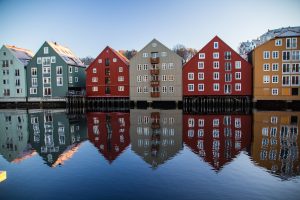
Today, the center of Tromsø is located on the southeast coast of Tromsøya, and it is a pleasant and well-arranged city center where you can enjoy some nice walks. In several places in the city, you can notice the many wooden houses that stand between Tromsø’s modern buildings. The city’s cathedral is also built of wood, and it is in the middle of Tromsø surrounded by Kirkeparken, which has been a burial ground since the Middle Ages. The cathedral was built in 1861 according to Christian Heinrich Grosch’s fine design. The interior is beautiful with stained glass windows and Christen Brun’s altar piece of Jesus’ resurrection as highlights.

A little north of Tromsø Cathedral you can see Church of Our Lady/Vår Frue Kirke, the city’s Catholic cathedral. Church of Our Lady is a small church that was built in wood in 1861 as the Protestant cathedral. In Tromsø you can also see the Arctic Cathedral, which lies to the east on the other side of the Tromsø Sound. The cathedral is formally called Tromsdalen Church, and it was constructed in beautiful modern architecture in 1965. It is known for the Return of Christ, which is a colossal glass mosaic that was put up the gable of the church.

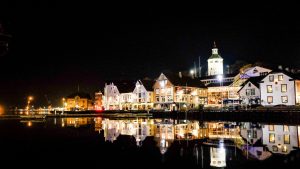
In Tromsø you can take a walk along the harbor and enjoy the city’s maritime atmosphere and the view across the water to the northern Norwegian mountains. At Stortorget square you can walk west into the city, where Vår Frue Kirke is located. Opposite the church you can see Tromsø’s cultural center and the city’s town hall. Both are set in modern buildings, and behind the town hall is Tromsø’s library, which is housed in one of the city’s most characteristic buildings. The library opened in 2005 with a new building under the Fokus Kino cinema’s wavy roof structure from 1973.

The roof is designed as arches that form a hyperbolic paraboloid shape. Fokus Kino was built into the new town hall complex on the same occasion. On the parallel street Storgata you can see another beautiful cinema, the World Theatre, which is one of Northern Europe’s oldest cinemas in continuous operation. The theater was built in 1915, and the following year the World Theater opened its doors, and there are still film screenings in the atmospheric cinema. A detail in the cinema is the preserved orchestra pit, a relic from the time when silent movies were made, which were accompanied by live music.

In the northern part of the center, you can see the preserved parts of Skansen, which was Tromsø’s medieval castle. Today, only Skansen’s fortress walls have been preserved, while the buildings on Skansen are not the original ones from the time of the fortress. However, they are still the oldest preserved houses in Tromsø, dating back to 1789, and over time they have been used as, among other things, customs booth, hospital, school and city museum. Skansen is located like an island in the city, and it was originally built on a headland in the Tromsø Sound with water on three sides and a moat facing the city.

Today, Skansen is as a venue used for various cultural activities. There are several museums in Tromsø, where you can learn about the history of the city and the region. At the Polar Museum, Tromsø’s history as a center for Arctic fishing and as a starting point for several polar expeditions is depicted. You can also visit the Perspektivet Museum, located in a building from 1838, and Polaria, which is a modern Arctic experience center with an interesting aquarium, the Tromsø Museum with culture and natural science. You might also like a visit to the Tromsø Arctic-Alpine Botanical Garden, which due to the city’s northern location is particularly interesting.

Top Attractions

Storgata

Storgata is the heart of Tromsø. It is the city’s main street and the place where past and present meet in a colorful mix of old wooden houses, modern shops and cafes with views of the mountains. The street runs like a lifeline through the center and is the natural place to begin any city walk. Many of the buildings, especially in the older part near the cathedral, date from the 19th century and have been preserved in the classic Northern Norwegian style with wooden facades in bright colors, small bay windows and ornate windows. Here you can still sense some of the atmosphere from the time when Tromsø was a trading city, fishing center and gateway to the Arctic Ocean.

In summer, Storgata is filled with people from early morning to late evening. Tourists, students and locals move between shops, galleries and cafes, while the street’s small side streets lead to cozy courtyards with restaurants and fine shops. On weekends, there is often music and street life, and in winter the street is covered in snow and Christmas lights, giving it an almost fairytale feel.


Tromsø Cathedral
Tromsø Domkirke

Tromsø Cathedral is a church located in the middle of Tromsø’s busy city center on the main street Storgata. It is one of the most striking buildings in the city and one of Norway’s few cathedrals built of wood. The church was inaugurated in 1861 and designed by architect Christian Heinrich Grosch, who was also behind a number of Norway’s other famous 19th-century buildings. Its architecture is neo-Gothic, but executed in the Nordic wooden tradition, which gives the building a warm and lively expression despite its impressive size. The tall, slender spire rises above the city’s rooftops and acts as a landmark for both sailors and city dwellers.

Inside, the church is characterized by simplicity and light. The wooden walls are painted in light colors, and the windows with pointed arches let in daylight in a way that emphasizes the height and harmony of the space. The altarpiece, painted by the Norwegian painter Adolph Tidemand, depicts the Resurrection of Christ and is one of the church’s most valuable works of art. The organ, built by Grönlunds Orgelbyggeri, is used for both church services and concerts, and the church’s acoustics make it a popular venue for classical concerts and choir performances.

Tromsø Cathedral is not only a religious center, but also an important cultural and historical symbol for the city. In the dark of winter, it stands illuminated as a warm gathering point amidst the snow, and in summer the square around the church is filled with life, music and markets. For more than 160 years, it has witnessed the city’s development from a fishing village and trading post to a modern Arctic university city.


Art Museum of Northern Norway
Nordnorsk Kunstmuseum

Nordnorsk Kunstmuseum is located in the heart of Tromsø city center, and is one of Northern Norway’s most important art institutions. The museum was founded in 1985 and has since worked to present art from all over the Arctic, with a special focus on the themes that characterize life in the North. These are light and darkness, the forces of nature, identity and Sami culture. The building, which previously housed Tromsø’s post office, is itself a beautiful example of 19th-century urban architecture in the form of an elegant and solid building adapted to the harsh climate.

Inside, you will find a collection that ranges from classical painting to modern installation works. The museum contains works by great Norwegian artists such as Peder Balke, Harriet Backer and Håkon Bleken, as well as contemporary art from younger, experimental voices from Northern Norway and the Arctic region. Great emphasis is placed on communication and accessibility, and the exhibitions are often accompanied by audio stories, films and interactive formats that give the audience the opportunity to experience art in new ways.


Tromsø Culture House
Kulturhuset i Tromsø

Tromsø Culture House is the city’s major cultural hub and a central part of modern city life. It is located in the city center, just a few steps from the main street, Storgata. It was opened in 1984 as a multifunctional cultural center for the whole of Northern Norway. The building is a clear product of its time. The style is modernist, and the place serves as a setting for an impressively wide range of activities, including theater, concerts, dance, lectures, films and festivals.

Inside, the Culture House contains several halls, including the Main Stage and the Small Stage, which are used for everything from classical concerts and opera to modern theater and popular music. The acoustics are excellent, and many Norwegian artists have given performances here. The foyer contains a café, exhibitions and meeting places, where the city’s cultural life merges across genres and generations. In the summer, life moves to the square in front of the building, where outdoor concerts and city festivals are often held.


Cathedral of Our Lady
Vår Frue Domkirke

Vår Frue Domkirke is beautifully located in the center of Tromsø. It was built in 1861 as the northernmost Catholic cathedral in the world. The church was made of wood, which gives it a warm, friendly appearance that stands in fine contrast to the harsh Arctic nature around the city. Its slender spire and facade with wooden details make it easily recognizable, and together with the small rectory and the former convent of the St. Elisabeth sisters, it forms a peaceful corner in the middle of Tromsø’s city life.

Inside, you will find a bright and intimate church room, where the simplicity emphasizes the spiritual character of the room. The pointed windows let in a soft light, and the altarpiece depicts the Virgin Mary with the child as a symbol of both protection and hope. Despite and perhaps because of its modest size, the church has a special atmosphere that is worth experiencing. Masses are held here in several languages, reflecting Tromsø’s diverse population and the city’s role as an international meeting place in the north.


Perspektivet Museum

Perspektivet Museum is one of Tromsø’s most atmospheric and thought-provoking museums. It is housed in a beautiful wooden building from 1838 close to the harbor. It is one of the city’s best-preserved historic houses, and the museum stands out by putting people at the center. It tells stories about northern Norwegian life, migration, minorities and the meeting of cultures. The name Perspektivet Museum is well chosen, because the exhibitions are precisely about seeing the world from different angles and understanding how Tromsø has been shaped by the people who have lived here.

Inside the museum, you will encounter historical photos, personal stories and artistic exhibitions that put the development of society into perspective. Part of the collection is based on the work of photographer Cora Sandel and artist Ellisif Wessel – women who documented life in the north in the early 1900s. Through their lenses, you see a changing Tromsø, where poverty, fishing and colonial trade mixed with urban growth and cultural exchange. The museum also presents current exhibitions about migration, climate and identity, which connect the past and present in surprising ways.


Polar Museum
Polarmuseet

The Polar Museum in Tromsø is one of Northern Norway’s most important cultural history museums and a must for anyone who wants to understand the region’s role in Arctic exploration. The museum opened in 1978, exactly 50 years after Roald Amundsen’s last voyage to the Arctic Ocean, and is housed in an old customs house from the 1830s by the harbor. The rustic wooden building, once a hub for trade and fishing, today creates an atmosphere that almost makes time stand still, and you can smell the tar and salt water in the planks when you step inside.

The exhibitions tell the story of Tromsø as the starting point for many of Norway’s great polar expeditions. In the 19th century, the city became known as the Gateway to the Arctic Ocean, because so many trappers, scientists and adventurers sailed from here to the unknown regions of the north. Through authentic objects, photographs and diaries, you gain insight into whaling, sealing and expeditions where courage and survival instinct were crucial. A special focus is devoted to Fridtjof Nansen and Roald Amundsen, who were two of Norway’s most legendary polar heroes, as well as their ships Fram and Maud, which became symbols of the exploration of the polar regions.

But the Polar Museum is not only about heroism and triumphs. The exhibitions also highlight the harsh aspects of fishing life and the ethical issues associated with the exploitation of the Arctic. You get a realistic picture of life in the small fishing stations, the extreme weather conditions and the loneliness that came with months in the ice and cold. In addition, the museum focuses on the indigenous peoples of the north, for example the meeting of the Sami and Inuit with the Norwegian fishing people.


Polaria

Polaria is one of Tromsø’s most family-friendly and modern visitor centers. It was opened in 1998 as part of Norway’s focus on Arctic communication and environmental awareness. The building is located on the waterfront and has a unique architecture: It consists of five large blocks that look like ice floes pressed against each other. It is a design that is intended to symbolize the sea ice being pushed onto land.

Inside Polaria, an aquarium, research center and experience room are combined. Visitors can see aquariums with fish and shellfish from the cold Arctic seas, and you can also experience the seals, which are both audience favorites and an important part of Polaria’s research work on animal behavior and environmental changes in the Arctic. The center also has a panoramic cinema, where you can watch films about Svalbard, polar expeditions and the strange dance of the northern lights.

Polaria emphasizes engaging children and young people through interactive exhibitions. Here you can touch ice, learn about ocean currents and understand how animals survive in extreme cold. It is an educational and entertaining experience that makes natural science concrete and present.


Tromsø University Museum
Tromsø Universitetsmuseum

Tromsø University Museum is the oldest museum in Northern Norway and a central place for anyone who wants to understand the region’s nature, culture and history. The museum was founded in 1872 and is today part of the University of Tromsø, Norway’s Arctic university. Its collections and exhibitions cover everything from geology, biology and ethnography to archaeology, theology and Sami culture.

One of the museum’s most important functions is to document and communicate life in the Arctic. The exhibitions show how people have adapted to the extreme conditions north of the Arctic Circle over the millennia, from Stone Age hunting cultures to modern-day urban life. The Sami exhibition is among the most comprehensive in the country and provides a deep insight into the Sami traditions, belief systems and social structures. Here you can see objects such as rune poles, clothing and tools, but also modern perspectives on Sami identity and political struggle.

The museum also features natural history exhibits where you can learn about the Arctic’s wildlife, plants and geological development. A popular section is about the Northern Lights, with both their physical explanation and the myths that have surrounded the phenomenon in different cultures. It combines natural science and folklore in a way that conveys the fascination of the Arctic lights.


Skansen

Skansen is Tromsø’s oldest defensive structure and one of the city’s most important historical attractions. The structure is located on a small hill by the harbor, close to the center, and was built in 1804 as part of the city’s defense against foreign invasions. Originally, Skansen consisted of wooden barracks and earthen ramparts, but over the years the structure has been modernized with masonry and cannon emplacements. Today, it stands as a living reminder of Tromsø’s strategic importance in Northern Norway, both during the Napoleonic Wars, during the war against Sweden and later during World War II, when the area had military relevance.

Today, Skansen functions as both a museum and an open-air recreation area. The preserved buildings house exhibitions about Tromsø’s military history, and there are cannons, uniforms and photographs from the period when the city was an important base for Northern Norway. You can walk around the old ramparts and paths, and the view over the harbor and Tromsøya gives a clear impression of why the structure was located here. Many visitors experience Skansen as a place where history and nature merge, and where you can see the city’s development from a small trading and fishing village to a modern Arctic city.


Prestvannet

Prestvannet is one of Tromsø’s most atmospheric natural sites and serves as both a recreational area, a bird sanctuary and a viewpoint in the middle of the city. The lake is located on the top of Tromsøya, the island where the city center is located, and it is an important sanctuary for both people and wildlife. Originally, Prestvannet was a water reservoir for the city, but in the early 1900s it was taken out of use and converted into a nature and bird area. Today it is a protected site with a diverse flora and fauna, and for many residents it is a place where they seek peace and fresh air all year round.

In summer, the lake is surrounded by green grass and paths where locals go for walks, runs or walk their dogs. Ducks, seagulls and terns breed in the area, and the midnight sun makes the water shimmer in golden hues. It is a favorite spot for photographers and nature lovers with the views from here. In winter, Prestvannet is transformed into a completely different landscape. The snow lies thickly on the ice, and the lake becomes a popular place for ice skating and playing. On cold, clear nights, the area is also one of the best places in the city to view the Northern Lights, because there is little light pollution and a clear view of the sky.


Tromsø Bridge
Tromsøbrua

Tromsø Bridge is one of the most striking symbols of the city and an engineering masterpiece, connecting the island of Tromsøya with the mainland across the Tromsøysundet. The bridge was inaugurated in 1960 and was Norway’s longest bridge at the time, at 1,036 meters. It consists of 58 elegant concrete arches and is built in a sleek, modern style that reflects the optimism and faith in progress of the 1960s. The bridge connected Tromsø to the mainland for the first time without the need for a ferry, and the bridge thus came to play a crucial role in the city’s growth and development.

Today, Tromsø Bridge is not only a traffic hub, but also one of the city’s most beautiful viewpoints. From the middle of the bridge, you get a magnificent panoramic view of the city center, the Arctic Cathedral and the mountains in the background. In winter, the city lights glow like stars along the water, while in summer the midnight sun makes the entire strait shine. Many choose to walk or cycle across the bridge to experience the view at their leisure, especially in the evening hours, when the light changes constantly and creates an almost cinematic scenery.


Arctic Cathedral
Ishavskatedralen

The Ishavskatedralen, formally known as Tromsdalen Church, is one of Northern Norway’s most recognizable buildings, and it stands as a symbol of Tromsø. The church is located on the mainland side of the city at the foot of the mountain, just where the Tromsø Bridge reaches over from the island. It was inaugurated in 1965 and designed by Norwegian architect Jan Inge Hovig, who wanted to create a modern church with roots in northern Norwegian nature and light.

The shape of the building is inspired by icebergs and northern Norwegian mountain formations. The characteristic triangular concrete elements clad in white aluminum rise like giant ice flakes against the sky. When the sun hits the facade, it almost dazzles, and in the dark the church shines like a lighthouse as if it were a landmark for travelers. The architectural idea was to unite the sacred with the landscape, so that the building itself appears as a part of nature rather than as an alien element in it.

Inside, the same idea of ​​simplicity and light continues. The space is open and sparsely decorated, but the large stained glass window behind the altar, by Victor Sparre, draws the eye. The work consists of 11-meter-high pieces of glass in deep blue, red and gold colors, symbolizing the return of Jesus and creating an alluring play of light when the sunlight falls through the glass.

The Arctic Cathedral functions as both a parish church and a cultural venue. Particularly famous are the so-called Midnight Sun Concerts, held in the summer months, where you can experience classical music and northern Norwegian tunes while the sun is high in the sky. In winter, northern lights concerts are arranged, where the music is accompanied by visual projections that imitate the play of colors in the sky.


Fjellheisen

The Fjellheisen is undoubtedly one of Tromsø’s most spectacular attractions and a place where the city’s dramatic geography truly reveals itself. The cable car was inaugurated in 1961 and connects the Tromsdalen district with the mountain peak Storsteinen, which is 421 meters above sea level. The actual journey up takes just four minutes, but the experience begins at the foot of the mountain, where you are surrounded by birch forest and the clear air of the fjord. As the cabin glides up above the treetops, the landscape opens up, and Tromsøya, the island where the city center is located, unfolds like a miniature map beneath you.

From the viewing terrace at the top, you have a panoramic view of fjords, islands and mountain ranges that change character depending on the season. In summer, the mountains are in greenish and gray tones with snowdrifts in the heights, while the midnight sun paints the landscape in a golden glow all night long. In winter, everything is covered in snow, and the darkness is broken by the yellow lights of the city and, if you are lucky, you can experience the dancing northern lights. It is one of the best places in Tromsø to see the Aurora Borealis, because it is free from the city’s light pollution and with a horizon in all directions.

At the top is the restaurant Fjellstua, which serves hot drinks, meals and Norwegian specialties. It is a popular place for both locals and tourists to enjoy the sunset, have dinner or simply warm up after a walk in the cold. Many choose to take the cable car up and hike down the mountain along the marked trail, which provides a nice combination of nature and exercise.

The area around Fjellheisen is also the starting point for several mountain hikes, including further up towards Tromsdalstinden, one of the most striking mountains in the region. On clear days, you can see all the way to Kvaløya and the Lyngen Alps, where some of Northern Norway’s highest peaks rise. The combination of easy accessibility and magnificent nature makes Fjellheisen one of the most memorable experiences in Tromsø, with light, air and endless horizons.

Other Attractions

Day Trips

Kvaløya

Kvaløya, which means Whale Island, is one of the largest islands in Tromsø municipality, and it offers many scenic excursion options from the city. The island lies west of Tromsøya and is connected to the mainland and the city via bridges, making it easily accessible for both drivers and cyclists. The landscape is dramatic and varied with high mountain peaks, deep fjords, lush valleys and small idyllic fishing villages, which testify to the area’s long history as home to both fishermen and Sami settlements. The combination of raw nature and cultural history makes Kvaløya one of the most popular places for a trip out of Tromsø.

The island offers a wealth of experiences all year round. In summer, the area is ideal for hiking, climbing, mountain biking and kayaking on the calm fjords. Every fjord, every bay and every mountain peak offers unique views, and photography in the midnight sun often becomes magical experiences. In winter, Kvaløya attracts adventurous guests with dog sledding, snowmobiling and ski tours in the mountains, where you can also experience the Northern Lights dancing over snow-capped peaks. The nature here is wild and magnificent, but at the same time accessible, making the island a perfect place to experience the Arctic without having to travel far from Tromsø.

Kvaløya is also known for its rich wildlife. The area is home to moose, reindeer, hares and a variety of bird species, and seals and white-tailed eagles are often seen along the coast. The island’s small fishing villages and farms provide a vivid insight into how people have lived in close interaction with the forces of nature for generations. It is a place where you can feel the tranquility, experience magnificent landscapes and understand why Northern Norway has attracted adventurers for centuries.


Lyngen Alps
Lyngsalpene

The Lyngen Alps are a spectacular mountain area located east of Tromsø. It is known for its steep peaks, deep valleys and dramatic landscapes. The area stretches for many kilometers and includes several of Northern Norway’s highest mountains, with Jiekkevarre being the highest at 1,833 meters. The Lyngen Alps are one of the most photographed and iconic natural areas in Northern Norway, and their characteristic snow-capped peaks rising directly from the fjords provide both visitors and locals with an impressive sight that changes dramatically with the seasons. The area is accessible from Tromsø in about 1–2 hours’ drive, making it a popular destination for day trips and longer excursions.

The Lyngen Alps offer a wealth of outdoor experiences year-round. In summer, the area beckons with hiking, mountaineering and climbing, with trails and routes varying from easy day hikes to demanding summit climbs. The fjords below invite kayaking, fishing and birdwatching, and nature photographers flock to capture the golden light of the midnight sun over the dramatic peaks. In winter, the Lyngen Alps transform into a paradise for ski and snowmobile enthusiasts, where pillows of snow and frozen valleys create optimal conditions for both off-piste and cross-country skiing, while the northern lights can often be enjoyed over the mountains.

The area is also rich in wildlife and cultural history. The mountains and forests are home to moose, reindeer, eagles and smaller mammals, while the small Sami and Norwegian settlements bear witness to human adaptation to the Arctic over the centuries. Local guides offer tours that combine nature experiences with stories about Sami culture, hunting traditions and Arctic survival.


Alta

Alta is located in Finnmark and about 5-6 hours drive northeast of Tromsø. It is known as the Northern Lights City due to the optimal conditions for experiencing the Aurora Borealis in winter. The city has a rich history dating back thousands of years, which is reflected in the Altaristningerne, which are UNESCO-protected rock carvings depicting hunting, ritual scenes and Sami culture. These rock carvings provide a unique insight into life in the Arctic thousands of years ago and make Alta an important historical and cultural center in Northern Norway.

Modern Alta is also a vibrant city with a wide range of cultural and leisure activities. The city has museums, art galleries and an active music and theater scene, and it serves as a hub for expeditions to the surrounding fjords, glaciers and mountain areas. In winter, dog sledding, snowmobile experiences and northern lights safaris are offered, while in summer, hiking, fishing and kayaking in the nearby fjords are offered. In the town you can visit Alta Museum, which is beautifully situated by the Alta River and conveys the history of the area from prehistoric times to the present day. There is a special focus on the famous Altar Carvings.

The Altar Carvings are one of the most significant archaeological finds in Norway. They consist of thousands of rock carvings carved into rocks along the banks of the Alta River, dating from the period around 4200–500 BC. The carvings show hunting scenes, animals such as reindeer and moose, as well as ritual and symbolic figures, and they provide a unique insight into the life, beliefs and social structures of the early settlers in the Arctic. They are also a reminder of man’s close relationship with nature, hunting and survival in northern conditions, and they are considered one of the world’s best-preserved examples of prehistoric art in polar regions. Visitors can experience the carvings both on guided tours and through modern communication in Alta Museum.

You can also visit the Northern Lights Cathedral, officially known as the Tromsø Arctic Cathedral. It stands as one of the city’s most iconic buildings and an architectural symbol of Tromsø. The church was inaugurated in 1965 and designed by architect Jan Inge Hovig with inspiration from the sharp mountain peaks and the Arctic landscape. This is seen in the distinctive triangular roof surfaces and the large triangular glass section behind the altar, which represents the northern lights and fills the room with light. The church room is bright and simple with white walls and an open, stylish interior that highlights the contrast between the Arctic nature outside and the colorful glass window. The Northern Lights Cathedral is used for both church services, concerts and cultural events.


Hammerfest

Hammerfest is located on the extreme west coast of Finnmark and is considered one of the world’s northernmost cities. The city has a long history as a trading and port city, where fishing, trade and shipping have been central elements for centuries. Hammerfest was particularly well-known in the 19th century as a starting point for Arctic expeditions and became a symbol of human endurance in the Arctic when the city was partially destroyed during World War II and later rebuilt with modern architecture in the mid-20th century.

The city offers interesting museums and cultural institutions such as Hammerfest Church, which was built in a modern style, and The Royal and Ancient Polar Bear Society, which tells about the city’s Arctic history, hunting traditions and research. Hammerfest also has a charming waterfront with restaurants, cafes and galleries, where you can taste local specialties and experience coastal culture up close.


Honningsvåg

Honningsvåg is located on the island of Magerøya in Finnmark and is often known as the gateway to the North Cape, as the city is the closest inhabited community to Europe’s northernmost cliff. The city has around 2,500 inhabitants and functions as an administrative and logistical center for the region. Historically, Honningsvåg has been an important port for fishing and coastal trade, and the city has managed to maintain its maritime character with ferry connections, small fishing houses and an active harbor life.

Honningsvåg is not only a transit town to the North Cape. The city also has its own attractions and experiences. Visitors can experience local museums that tell about the history of fishing, Sami culture and the war history from World War II, when the city was partially destroyed and later rebuilt. The charming city center with small shops, cafes and restaurants gives a good impression of life in an isolated Arctic community, where nature and culture are still closely connected.


North Cape
Nordkapp

Nord Cape is located on Magerøya in Finnmark and is known as the northernmost point in Europe. It is for many an iconic destination for tourists and adventurers alike. The cliff rises 307 meters above sea level and offers spectacular views of the Barents Sea, where the midnight sun in summer creates a magical light, and where the northern lights in winter can be experienced in all their intensity. North Cape has historically been an important navigation point for fishermen and seafarers, and today the place is a combination of natural beauty and modern tourist facilities.

The North Cape Center at the cliff offers exhibitions about the culture, history and nature of the region. You can learn about Sami life, polar history and past expeditions. There are also cafes, souvenir shops and a small auditorium where films and presentations about the area are shown. Visitors to North Cape can walk along the paths to the edge of the cliff, take pictures and experience the mighty sea, where storms and waves often emphasize the power of nature.

North Cape is more than just a geographical point. It is an experience of the raw beauty of the Arctic. The combination of dramatic nature, historical tales and the feeling of standing on the top of Europe makes North Cape a place that leaves strong memories.

North Cape is the most famous and most easily accessible northern point in Norway and Europe, where you can drive right up to the cliff edge of Magerøya and stand over the Barents Sea. It is located at 71°10′21″ north latitude and is often considered the northernmost point of Europe in a tourist sense. However, geographically speaking, North Cape is not the absolute northernmost point on the Norwegian mainland or in Europe. The northernmost point is actually a few kilometers further northwest on Magerøya. It is at Knivskjellodden, which protrudes 1,457 meters further into the sea than North Cape itself. However, Knivskjellodden can only be reached on foot via a longer hike from the North Cape Road.


Lakselv

Lakselv is located in Porsanger Municipality in Finnmark in the region northeast of Tromsø, and the town serves as one of the most important centers in this part of Norway. The town is beautifully situated on the banks of the Lakselva, one of Norway’s best salmon rivers, providing both a historical and scenic backdrop to the town. Lakselv has traditionally been a trade and service centre for locals, Sami communities and travellers exploring the northern fjords and mountains.

The town offers several cultural and historical attractions such as the Porsanger Museum, which tells the story of Sami culture, local history and life in Finnmark through the centuries. Lakselv also has small galleries, cafés and shops where you can experience local crafts and traditional products from the region. Although the town is relatively small, it serves as a hub for excursions to the surrounding fjords, mountains and national parks.

Geolocation

In short

Tromsø, Norway

Tromsø, Norway

Overview of Tromsø

Tromsø is the largest city and the regional center in Northern Norway. The town’s history started when Håkon Håkonsson built a church on Tromsøya in 1252 to mark the area as Norwegian land. Skansen, which was a medieval castle for protection against attacks from Karelia and Russia, also dates from this time. Tromsø became an ecclesiastical city that attracted people from all over the area to church services, and this brought trade and the need for accommodation, and this led to development of a town and community.

However, Tromsø remained a border town on the Norwegian outskirts, and that only changed when the border between Norway and Russia moved towards the Kola Peninsula. Centuries passed, and when Bergen’s trade monopoly ended in 1789, Tromsø’s trade flourished, but fewer than 100 people still lived in the city. In 1794, Christian VII granted Tromsø city rights, and at the beginning of the 19th century Tromsø became the regional episcopal seat, and a fishing boom started in the city, which was expanded rapidly throughout the 19th century, a development that continues to this day.

Today, the center of Tromsø is located on the southeast coast of Tromsøya, and it is a pleasant and well-arranged city center where you can enjoy some nice walks. In several places in the city, you can notice the many wooden houses that stand between Tromsø’s modern buildings. The city’s cathedral is also built of wood, and it is in the middle of Tromsø surrounded by Kirkeparken, which has been a burial ground since the Middle Ages. The cathedral was built in 1861 according to Christian Heinrich Grosch’s fine design. The interior is beautiful with stained glass windows and Christen Brun’s altar piece of Jesus’ resurrection as highlights.

About the Tromsø travel guide

Contents: Tours in the city + tours in the surrounding area
Published: Released soon
Author: Stig Albeck
Publisher: Vamados.com
Language: English

About the travel guide

The Tromsø travel guide gives you an overview of the sights and activities of the Norwegian city. Read about top sights and other sights, and get a tour guide with tour suggestions and detailed descriptions of all the city’s most important churches, monuments, mansions, museums, etc.

Tromsø is waiting for you, and at vamados.com you can also find cheap flights and great deals on hotels for your trip. You just select your travel dates and then you get flight and accommodation suggestions in and around the city.

Read more about Tromsø and Norway

Norway Travel Guide: https://vamados.com/norway
City tourism: https://visittrom-so.no
Main Page: https://www.vamados.com/

Buy the travel guide

Click the “Add to Cart” button to purchase the travel guide. After that you will come to the payment, where you enter the purchase and payment information. Upon payment of the travel guide, you will immediately receive a receipt with a link to download your purchase. You can download the travel guide immediately or use the download link in the email later.

Use the travel guide

When you buy the travel guide to Tromsø you get the book online so you can have it on your phone, tablet or computer – and of course you can choose to print it. Use the maps and tour suggestions and you will have a good and content-rich journey.


Travel Expert

Stig Albeck

Gallery

Gallery

Other Interesting Guides

Similar to Tromsø Travel Guide